Welcome to Moksh Tubes & Fittings LLP

Monday - Friday : 8:00 AM to 7:00 PM

EN8 vs EN9 vs EN19 vs EN24 — Which Engineering Steel Is Best for Your Application?

EN8 vs EN9 vs EN19 vs EN24 — Which Engineering Steel Is Best for Your Application?

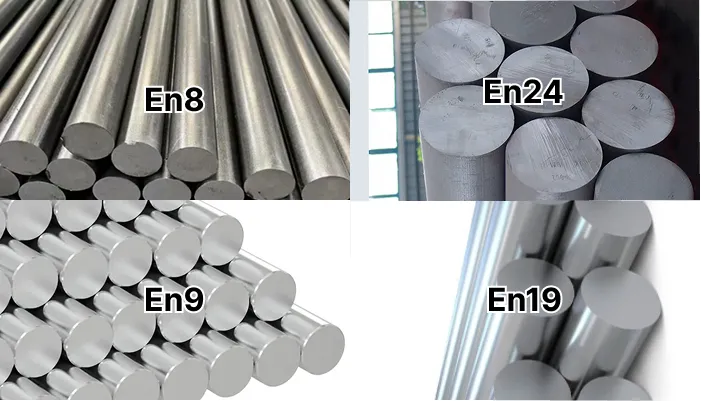
Choosing the right engineering steel is critical for ensuring performance, safety, durability, and cost efficiency. In 2025, the four most widely used engineering steel grades are:

  • EN8 – Medium carbon steel for general engineering
  • EN9 – Higher carbon steel for wear applications
  • EN19 (4140) – Chromium-molybdenum alloy steel
  • EN24 (4340) – Nickel-chromium-molybdenum high-strength steel

Each grade has a different combination of strength, toughness, hardness, machinability, wear resistance, and heat treatment capability. This expert comparison helps industries determine which grade is best.
Chemical Composition — The Core Difference

Grade Carbon Alloying Elements Type
EN8 0.40–0.45% None Medium Carbon Steel
EN9 0.50–0.60% None High Carbon Steel
EN19 0.40% Cr, Mo Alloy Steel
EN24 0.40% Ni, Cr, Mo High-Strength Alloy Steel

EN8 & EN9 = simple carbon steels

EN19 & EN24 = alloy steels → much higher performance

Mechanical Strength Comparison

Grade Tensile Strength Hardness Toughness
EN8 Medium Medium Medium
EN9 Medium–High High Medium
EN19 High High High
EN24 Very High Very High Very High

Best Overall Strength → EN24

Best Balanced Properties → EN19

Heat Treatment Response

Grade Quench & Temper Induction Hardening Case Hardening
EN8 Good Good Limited
EN9 Very Good Very Good Limited
EN19 Excellent Excellent Good
EN24 Outstanding Excellent Good

EN24 performs best under heat treatment.

Wear Resistance

  • EN9 → High hardness after heat treatment
  • EN24 → High wear + high toughness
  • EN8 → Moderate
  • EN19 → Good wear + excellent fatigue resistance

Best for tools & wear components: EN9

Best for high-impact wear: EN24

Machinability

Grade Machinability
EN8 ⭐⭐⭐⭐⭐ Best
EN9 ⭐⭐⭐⭐ Good
EN19 ⭐⭐⭐ Medium
EN24 ⭐⭐ Difficult due to toughness

If machining cost matters → Choose EN8.

Applications by Grade

EN8 Applications

  • Shafts
  • Keys
  • Studs
  • General machine parts
  • Automotive components

EN9 Applications

  • Gears
  • Knives
  • Machinery tools
  • Wear plates
  • Crankshafts (light duty)

EN19 Applications

  • Gears & pinions
  • High-strength shafts
  • Oilfield tools
  • Crankshafts
  • Connecting rods
  • Bolts & studs

EN24 Applications

  • Aircraft landing gear
  • Motorsport components
  • Heavy-duty shafts
  • High-performance gears
  • Helicopter parts

Which Steel Should You Choose?

Choose EN8 if

  • Budget is important
  • You need general purpose steel
  • Machinability is a priority

Choose EN9 if

  • You need higher hardness
  • Component faces regular wear
  • Application includes tools or gears

Choose EN19 if

  • You need balanced hardness & toughness
  • Component faces shock loading
  • You want a strong, reliable upgrade to EN8

Choose EN24 if

  • You need maximum strength & toughness
  • Application involves high impact or load
  • Used in aerospace or motorsports

Cost Comparison (2025 Industry Range)

Grade Cost Reason
EN8 Low Simple carbon steel
EN9 Medium Higher carbon content
EN19 Medium–High Alloy steel
EN24 High Premium high-strength alloy

Best cost–performance ratio → EN19

Best economy grade → EN8

Premium performance → EN24

Summary Chart

Requirement Best Grade
Best Machinability EN8
Best Wear Resistance EN9
Best All-Round Performance EN19
Best High-Strength + Toughness EN24
Best for Impact/Shock Loads EN24
Best Budget Option EN8

Conclusion

Engineering steels EN8, EN9, EN19, and EN24 each offer unique strengths. The best grade depends on your application, load conditions, machining requirements, and budget.

EN8 → General engineering, low cost

EN9 → Wear resistance

EN19 → Balanced performance

EN24 → Maximum strength + toughness

For high-quality engineering steel bars, rods, tubes, and precision parts, Moksh Tubes & Fittings LLP provides certified materials with exceptional quality and competitive pricing.

FAQ's

Which steel is better: EN19 or EN24?

EN24 is stronger and tougher. But EN19 is more economical and versatile.

Is EN8 a good engineering steel?

Yes — it is the most commonly used general-purpose engineering steel.

Which grade is best for gears?

Light to medium gears → EN9 High-performance gears → EN19 / EN24

Which steel is best for shafts?

General shafts → EN8 High-strength shafts → EN19 Heavy-duty shafts → EN24

Which grade lasts longest?

EN24, due to its superior strength & fatigue resistance.

Contact Us

At Moksh Tubes & Fittings LLP, we’re dedicated to making your purchases seamless — offering expert advice, a wide inventory of certified products, and global support for every order, large or small.

Get in Touch
{ "@context": "https://schema.org", "@type": "FAQPage", "mainEntity": [ { "@type": "Question", "name": "Which steel is better: EN19 or EN24?", "acceptedAnswer": { "@type": "Answer", "text": "EN24 is stronger and tougher than EN19, making it ideal for high-impact and heavy-duty applications. EN19 is more economical and suitable for balanced performance needs." } }, { "@type": "Question", "name": "Is EN8 a good engineering steel?", "acceptedAnswer": { "@type": "Answer", "text": "Yes, EN8 is a widely used medium-carbon steel offering good machinability and adequate strength for general engineering applications." } }, { "@type": "Question", "name": "Which grade is best for gears?", "acceptedAnswer": { "@type": "Answer", "text": "For light to medium-duty gears, EN9 is ideal. For high-performance gears, EN19 or EN24 should be used due to their superior strength and fatigue resistance." } }, { "@type": "Question", "name": "Which engineering steel is best for shafts?", "acceptedAnswer": { "@type": "Answer", "text": "EN8 works well for general shafts, EN19 is preferred for high-strength shafts, and EN24 is used for heavy-duty or high-impact shafts." } }, { "@type": "Question", "name": "Which engineering steel grade lasts the longest?", "acceptedAnswer": { "@type": "Answer", "text": "EN24 lasts the longest due to its exceptional toughness, fatigue resistance, and high strength under shock loads." } } ] } { "@context": "https://schema.org", "@type": "Article", "headline": "EN8 vs EN9 vs EN19 vs EN24 — Which Engineering Steel Is Best for Your Application? (2025 Expert Guide)", "description": "A full 2025 comparison of EN8, EN9, EN19, and EN24 engineering steels, covering properties, strength, hardness, wear resistance, applications, and selection guide.", "author": { "@type": "Organization", "name": "Moksh Tubes & Fittings LLP" }, "publisher": { "@type": "Organization", "name": "Moksh Tubes & Fittings LLP", "logo": { "@type": "ImageObject", "url": "https://mokshtubes.com/logo.png" } }, "url": "https://mokshtubes.com/en8-vs-en9-vs-en19-vs-en24-engineering-steel-comparison", "mainEntityOfPage": "https://mokshtubes.com/en8-vs-en9-vs-en19-vs-en24-engineering-steel-comparison", "keywords": "EN8 vs EN9, EN19 vs EN24, engineering steel comparison, EN8 applications, EN24 strength, EN19 alloy steel" }