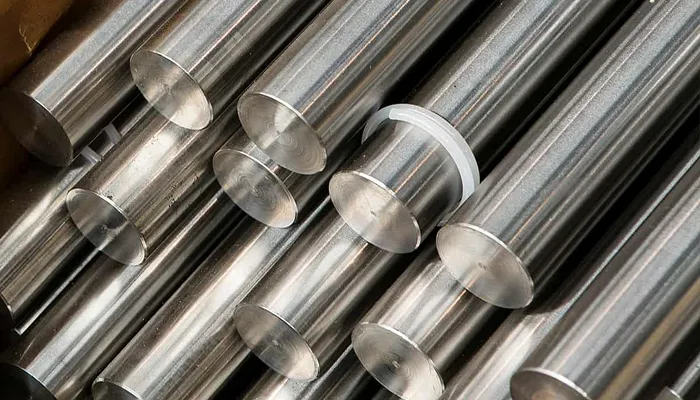
Welcome to Moksh Tubes & Fittings LLP

Monday - Friday : 8:00 AM to 7:00 PM

Why Nickel Alloy Bars Are Used in High-Temperature Industries

Why Nickel Alloy Bars Are Used in High-Temperature Industries

Nickel alloy bars are considered the superheroes of the metal world. When industries face:

  • ✔ Extreme temperatures
  • ✔ High pressure
  • ✔ Corrosive chemicals
  • ✔ Oxidation
  • ✔ Thermal shock
  • ✔ Chlorides & seawater

— ordinary steel fails, but nickel alloys continue to perform safely.

This is why nickel alloy bars are used in the most demanding environments like:

  • 🔥 Power plants
  • 🔥 Aerospace
  • 🔥 Oil & gas
  • 🔥 Chemical reactors
  • 🔥 Petrochemical furnaces
  • 🔥 Marine & offshore

This guide explains why nickel alloys are best, which grades are used, their applications, benefits, and what makes them different from stainless or alloy steel.
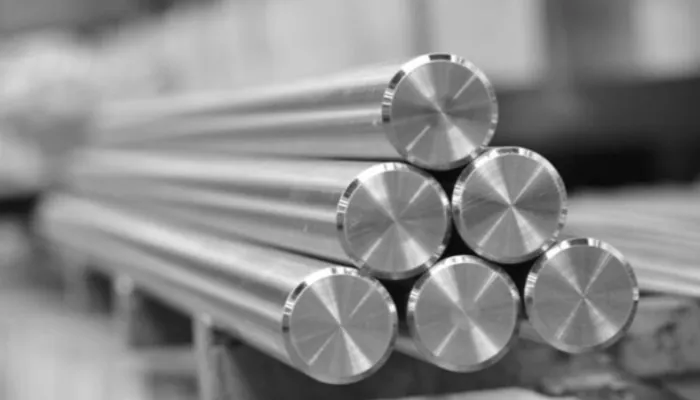
What Are Nickel Alloy Bars?

Nickel alloys are metals with a high percentage of nickel mixed with chromium, molybdenum, iron, or copper.

Popular Nickel Alloys Include:

  • Inconel 600 / 625 / 718
  • Incoloy 800 / 825
  • Monel 400 / K500
  • Hastelloy C22 / C276
  • Nickel 200 / 201

These alloys excel where stainless steel or alloy steel cannot survive.

Why Nickel Alloy Bars Are Used in High-Temperature Industries

A) Exceptional High-Temperature Strength (up to 1000°C+)

Nickel alloys maintain structural integrity at temperatures where steel loses half its strength.

Temperature Resistance Chart:

  • Inconel 600 → Up to 1175°C
  • Inconel 625 → Up to 980°C
  • Inconel 718 → Up to 700°C (plus super strength)
  • Incoloy 800H/HT → Up to 1100°C

This makes nickel bars essential for:

  • ✔ Heaters
  • ✔ Superheaters
  • ✔ Furnace parts
  • ✔ Petrochemical reformers

B) Unmatched Corrosion Resistance

Nickel alloys survive the harshest chemicals and resist:

  • ✔ Acids (HCl, H₂SO₄, HNO₃)
  • ✔ Chlorides
  • ✔ Seawater
  • ✔ High-temperature oxidation
  • ✔ Sour gas (H₂S)
  • ✔ Caustic chemicals

Most common choices:

  • Hastelloy C276 → Acidic, corrosive environments
  • Monel 400 → Seawater & marine
  • Inconel 625 → Hot corrosive gases

C) Excellent Oxidation Resistance

Nickel alloy bars do not scale or crack at high heat. Perfect for:

  • ✔ Heating elements
  • ✔ Thermal cycling
  • ✔ Furnace tubes & burners

Stainless steel starts scaling above 800°C, but nickel alloys stay stable.

D) Outstanding Mechanical Strength

Even at extreme temperature, nickel alloys:

  • Don’t deform
  • Don’t creep
  • Don’t crack

Crucial for:

  • ✔ Turbine engines
  • ✔ Heat exchangers
  • ✔ Power plant components
  • ✔ Petrochemical reformers

E) Superior Resistance to Thermal Fatigue

Nickel alloys tolerate:

  • ✔ Thermal shock
  • ✔ Sudden temperature jumps
  • ✔ High-temperature fatigue

Excellent for on/off cycles in:

  • Power boilers
  • Furnaces
  • Heat-treat plants

F) Resistance to High Pressure + High Temperature Together

Nickel alloys perform flawlessly under extreme heat, high pressure, and corrosive chemicals — a combination stainless steel cannot handle.

Popular Nickel Alloy Bars & Their Uses

1. Inconel Bars (600 / 625 / 718)

  • ✔ Best for high temperature
  • ✔ Excellent oxidation resistance
  • ✔ Used in aerospace, furnaces, reactors

2. Incoloy Bars (800H / 800HT / 825)

  • ✔ Perfect for heat treatment equipment
  • ✔ Great for chemical plants

3. Monel Bars (400 / K500)

  • ✔ Best for seawater & chloride environments
  • ✔ Offshore, pumps, condensers

4. Hastelloy Bars (C22 / C276)

  • ✔ Excellent acid resistance
  • ✔ Used in chemical reactors, pickling lines

5. Nickel 200 / 201

  • ✔ High purity nickel
  • ✔ Used in caustic soda production & electrical components

Industries That Use Nickel Alloy Bars

  • ✔ Oil & Gas – high-temp pipes, sour gas lines
  • ✔ Petrochemical Plants – reformers, crackers
  • ✔ Chemical Processing – acid lines, heat exchangers
  • ✔ Marine & Offshore – pumps, valves, shafts
  • ✔ Aerospace – turbine blades, engine components
  • ✔ Power Plants – superheaters, boiler tubes

Nickel Alloy Bars vs Stainless Steel Bars

Property Nickel Alloys Stainless Steel
High Temp Strength ★★★★★ ★★☆☆☆
Corrosion Resistance ★★★★★ ★★★★☆
Cost Higher Medium
Pressure Resistance ★★★★★ ★★★☆☆
Thermal Shock Excellent Moderate
Lifespan Very Long Long

Verdict: Nickel alloys are the best choice when temperature + corrosion + pressure exist together.

Why Nickel Alloys Are Expensive (But Worth It)

Nickel alloy bars cost more because:

  • ✔ Difficult manufacturing
  • ✔ High nickel content
  • ✔ Complex forging & machining
  • ✔ Used in critical applications

But they save money long-term because:

  • ✔ No early failure
  • ✔ Fewer shutdowns
  • ✔ Higher performance
  • ✔ Long lifespan

Why Moksh Tubes Is a Trusted Supplier of Nickel Alloy Bars

Moksh Tubes supplies:

  • Inconel 600 / 625 / 718
  • Incoloy 800 / 825
  • Monel 400 / K500
  • Hastelloy C22 / C276
  • Nickel 200 / 201
  • ✔ Sizes from 6 mm to 300 mm
  • ✔ Hot Rolled, Cold Drawn, Bright Bars
  • ✔ MTC 3.1 / 3.2 certified
  • ✔ Ultrasonic & PMI testing
  • ✔ Export to 45+ countries
  • ✔ Precision machining available
  • ✔ Cut-to-length service

Conclusion

Nickel alloy bars are the ultimate choice for high-temperature industries because they offer extreme heat resistance, superior corrosion protection, high strength under pressure, and stability under thermal shock.

If your project involves heat, pressure, or corrosion → Nickel Alloys are the safest and most reliable option.

Moksh Tubes supplies a complete range of high-temperature nickel alloy bars built for long-lasting industrial performance.

FAQ's

Which nickel alloy bar handles the highest temperature?

Inconel 600 / Incoloy 800HT.

Which alloy is best for acid environments?

Hastelloy C276.

Which nickel alloy is best for seawater?

Monel 400.

Do you supply custom-cut bars?

Yes — cut-to-length available.

Contact Us

At Moksh Tubes & Fittings LLP, we’re dedicated to making your purchases seamless — offering expert advice, a wide inventory of certified products, and global support for every order, large or small.

Get in Touch