Welcome to Moksh Tubes & Fittings LLP

Monday - Friday : 8:00 AM to 7:00 PM

Flanges Explained  Types, Face Finishes & Pressure

Flanges Explained Types, Face Finishes & Pressure

Flanges are one of the most important components in any piping system. They connect pipes, valves, pumps, and equipment — ensuring a safe, leak-proof flow in industrial plants.

But many engineers, buyers, and project managers struggle with questions like:

  • Which flange type should I use?
  • What is RF, FF, RTJ face finish?
  • What do pressure ratings like 150, 300, 600 mean?
  • Which flange is best for high-pressure or corrosive service?

This guide explains everything in simple, humanized English so anyone can choose the right flange confidently.
What Are Flanges?

A flange is a mechanical connector that joins pipes or equipment using bolts and gaskets.

✔ Why flanges are important

  • Allow easy assembly & disassembly
  • Provide leak-proof sealing
  • Handle high pressure
  • Help in inspection & maintenance

Types of Flanges (Most Common in 2025)

1. Weld Neck Flange (WNRF)

  • Long tapered neck
  • Best for high pressure & temperature
  • Used in boilers, heat exchangers, chemical plants

2. Slip-On Flange (SORF)

  • Pipe slips inside the flange
  • Easy installation
  • Suitable for low to medium pressure

3. Blind Flange (BLRF)

  • Used to close pipe ends
  • Common in testing & maintenance

4. Socket Weld Flange (SWRF)

  • Small pipe inserted into socket
  • Best for small bore, high-pressure lines

5. Threaded Flange (THRF)

  • No welding required
  • Used in flammable environments where welding is unsafe

6. Lap Joint Flange (LJRF)

  • Used with stub ends
  • Ideal for systems requiring frequent dismantling

Flange Face Finishes (Very Important for Leak-Proof Seal)

Flange faces determine the type of gasket used & sealing performance.

1. Raised Face (RF)

  • Most common
  • Suitable for 150, 300, 600 class flanges

2. Flat Face (FF)

  • Used for cast iron and low-pressure service

3. Ring Type Joint (RTJ)

  • Metal-to-metal sealing
  • Excellent for very high pressure + high temperature
  • Used in petrochemical and offshore plants

Flange Pressure Ratings (Class 150 to Class 2500)

Class Pressure Capacity (Approx) Common Use
150 Low pressure Water, HVAC
300 Medium pressure Petrochemical
600 High pressure Steam, Oil
900 Higher pressure Offshore
1500 Very high Refineries
2500 Extreme pressure Critical plants

Material Selection Guide

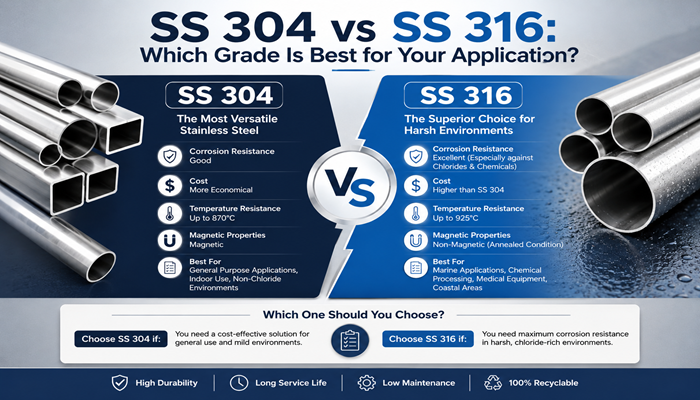
  • Stainless Steel (304, 316, 321): For water, food, chemical, pharma lines.
  • Carbon Steel (A105): For general & low-temperature service.
  • Alloy Steel (F5, F9, F11, F22): For high-temperature & power plant use.
  • Duplex / Super Duplex: For seawater & chloride environments.
  • Nickel Alloys (Inconel, Hastelloy, Monel): For highly corrosive chemical processing.

How to Select the Right Flange? (Simple Guide)

Choose based on:

  • Pressure rating
  • Temperature
  • Corrosion level
  • Piping design
  • Gasket compatibility
  • Assembly frequency
  • Welding requirement

If unsure → Moksh Tubes can analyze your operating conditions and recommend the best flange type.

Why Moksh Tubes Is a Trusted Flange Supplier

  • Full range: WNRF, SORF, BLRF, THRF, SWRF, LJRF
  • Stainless, Alloy Steel, Carbon Steel, Duplex, Nickel Alloys
  • MTC 3.1 / 3.2 provided
  • Large ready stock for fast delivery
  • Export to 40+ countries
  • Precision machining & perfect surface finish
  • Customized flanges available on request

Conclusion

Flanges are essential for creating strong, leak-proof, and safe piping connections. Understanding types, face finishes, and pressure ratings makes it easier to select the right one for your project and avoid costly failures.

If you need help choosing the right flange for your pressure or temperature conditions, the Moksh Tubes technical team is always ready to assist.

Contact Us

At Moksh Tubes & Fittings LLP, we’re dedicated to making your purchases seamless — offering expert advice, a wide inventory of certified products, and global support for every order, large or small.

Get in Touch