Welcome to Moksh Tubes & Fittings LLP

Monday - Friday : 8:00 AM to 7:00 PM

Flanges Explained: Types, Face Finishes & Pressure Ratings

Flanges Explained: Types, Face Finishes & Pressure Ratings

Flanges are critical connectors in every industrial piping system. They allow engineers to attach:

  • Pipes
  • Valves
  • Pumps
  • Heat exchangers
  • Instruments

— creating a strong, leak-proof, and serviceable connection.

But most buyers struggle with questions like:

  • What is the difference between Weld Neck and Slip-On flanges?
  • What does RF, FF, RTJ face mean?
  • What is Class 150, 300, 600… 2500?
  • Which flange is best for high pressure?

This beginner-friendly guide answers everything in simple English.
What Are Flanges?

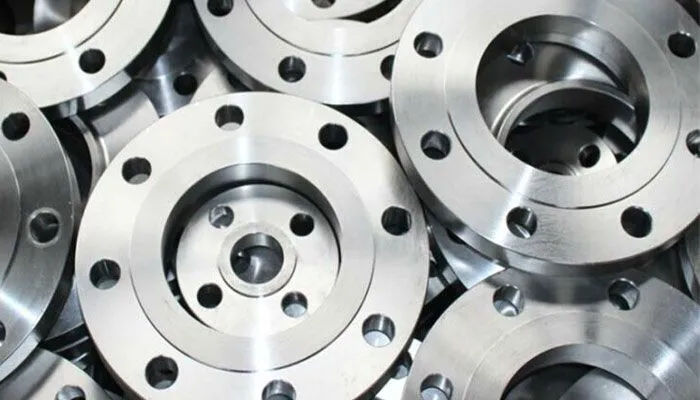
A flange is a mechanical plate used to connect two pipes or equipment using bolts and gaskets.

Why flanges are essential

  • Easy assembly & disassembly
  • Perfect sealing using gaskets
  • Suitable for high pressure and temperature
  • Helpful for maintenance
  • Enable modification in pipelines

Types of Flanges (Most Used in Industry)

1) Weld Neck Flange (WNRF)

Has a long tapered neck for smooth stress distribution.

Best for:

  • High pressure
  • High temperature
  • Critical lines (steam, oil & gas, boilers)

2) Slip-On Flange (SORF)

Pipe slips inside the flange before welding.

Best for:

  • Low/medium pressure
  • Easy installation
  • Low-temperature services

3) Blind Flange (BLRF)

Used to close the end of a pipeline or vessel.

Best for:

  • Maintenance
  • Testing
  • Isolation

4) Socket Weld Flange (SWRF)

Pipe fits into a socket and is fillet welded.

Best for:

  • Small-bore high-pressure lines
  • Hydraulic lines
  • Chemical injection lines

5) Threaded Flange (THRF)

Screwed connection → no welding required.

Best for:

  • Flammable areas where welding is unsafe
  • Temporary lines

6) Lap Joint Flange (LJRF)

Used with stub ends for easy rotation and alignment.

Best for:

  • Frequent disassembly
  • Corrosive systems (stub end handles the media)

Flange Face Finishes (Critical for Leak-Proof Sealing)

Face finish determines which gasket you must use.

1) Raised Face (RF)

Most common → provides better gasket compression.

Used in: Class 150, 300, 600, 900 flanges.

2) Flat Face (FF)

Flat sealing surface.

Used in:

  • Cast iron fittings
  • Low pressure applications

3) Ring Type Joint (RTJ)

Metal-to-metal sealing groove → strongest sealing type.

Best for:

  • Extremely high pressure
  • High temperature oil & gas lines
  • Offshore & subsea systems

Flange Pressure Ratings (Class 150 to 2500)

Pressure class = how much pressure the flange can safely handle.

Pressure Class Chart (ASME B16.5)

  • Class 150 → Low pressure (water, HVAC)
  • Class 300 → Medium pressure (chemical plants)
  • Class 600 → High pressure (steam, refinery)
  • Class 900 → Higher pressure (oil & gas)
  • Class 1500 → Very high pressure
  • Class 2500 → Extreme pressure (critical plants)

Higher class → thicker flange → stronger sealing.

Flange Materials (Choose Based on Media & Temperature)

  • Stainless Steel: 304 / 304L, 316 / 316L, 321, 347
  • Carbon Steel: ASTM A105
  • Alloy Steel: F5, F9, F11, F22
  • Duplex / Super Duplex: 2205, 2507
  • Nickel Alloys: Inconel, Monel, Hastelloy

Choosing the correct material prevents corrosion, cracking, and leakage.

How to Select the Right Flange (Simple Guide)

  • ✔ High pressure → WNRF or RTJ
  • ✔ Low/medium pressure → SORF
  • ✔ Maintenance needed → Blind flange
  • ✔ No welding allowed → Threaded flange
  • ✔ Need easy alignment → Lap joint flange
  • ✔ Small-bore high-pressure lines → SWRF

Why Moksh Tubes Is a Reliable Flange Supplier

  • Weld Neck, Slip-On, Blind, Lap Joint, Threaded, Socket Weld
  • Class 150 to 2500 available
  • Stainless, Carbon, Alloy, Duplex, Super Duplex, Nickel Alloys
  • CNC-machined flanges for perfect finish
  • MTC 3.1 / 3.2 provided
  • PMI, UT, Hydro-test done
  • Export to 45+ countries
  • Custom flanges as per drawing

Conclusion

Flanges may look simple, but choosing the wrong type can cause:

  • ❌ Leaks
  • ❌ Pressure loss
  • ❌ Gasket failure
  • ❌ Safety hazards
  • ❌ Costly breakdowns

When selected correctly, flanges ensure:

  • ✔ Leak-proof operation
  • ✔ Long-lasting performance
  • ✔ High reliability
  • ✔ Easy maintenance

Moksh Tubes supplies high-quality, certified flanges suitable for all industrial applications.

FAQ's

Which flange is best for high pressure?

Weld Neck Flange + RTJ face.

Which flange is cheapest?

Slip-On Flange.

What is a Blind Flange used for?

To close pipe ends or for testing.

Do you supply custom flanges?

Yes — as per drawing.

Contact Us

At Moksh Tubes & Fittings LLP, we’re dedicated to making your purchases seamless — offering expert advice, a wide inventory of certified products, and global support for every order, large or small.

Get in Touch