Choosing the right material for chemical processing, seawater handling, refinery systems, or high-temperature industrial environments is not a small decision. It affects safety, maintenance cost, downtime, plant efficiency, and long-term reliability. In many cases, it can even represent the difference between stable operation and catastrophic failure.
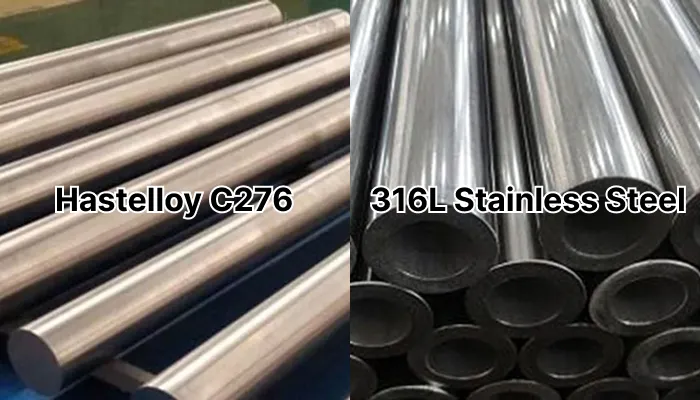
When engineers compare Hastelloy C276 and 316L stainless steel, they are not comparing equals — they are comparing two materials designed for completely different environments.
316L is a reliable, popular, and economical stainless steel used worldwide in mild to moderate corrosion environments.
Hastelloy C276 is a premium nickel-molybdenum-chromium superalloy, engineered for the world’s most extreme and aggressive corrosion conditions — where failure is simply not acceptable.
This expert guide breaks down the complete difference between C276 and 316L in a clear, humanized, engineering-friendly way so you can confidently select the right material for your next project.