Welcome to Moksh Tubes & Fittings LLP

Monday - Friday : 8:00 AM to 7:00 PM

High Strength Stainless Steel vs Alloy Steel vs Super Duplex: Which Material Should You Choose in 2025?

High Strength Stainless Steel vs Alloy Steel vs Super Duplex: Which Material Should You Choose in 2025?

Choosing the right engineering material in 2025 is more complex than ever. Industries such as oil & gas, aerospace, marine, defence, chemical processing, and heavy machinery require materials that can handle:

  • Extreme strength
  • Corrosion
  • High pressure
  • Fatigue
  • Temperature variations
  • Wear
  • Harsh chemical environments

The three most commonly compared material families are:

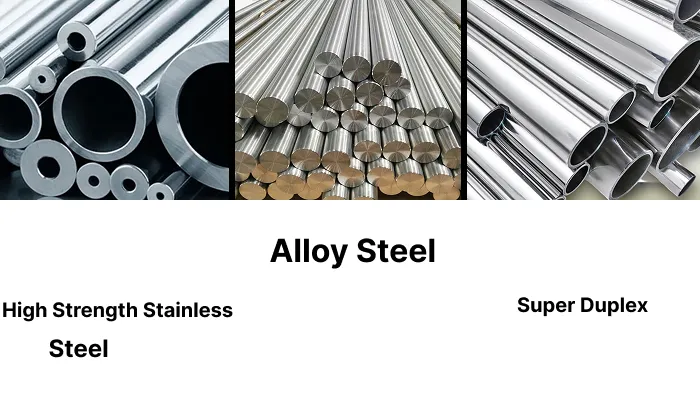
  • High Strength Stainless Steel (HSSS)
  • Alloy Steel (Carbon + Low Alloy + High Alloy Steel)
  • Super Duplex Stainless Steel (SDSS)

Each material offers unique advantages — but each also has limitations. This detailed guide will help engineers, buyers, and manufacturers choose the right material for performance, longevity, and cost-efficiency.
Understanding Each Material Family

High Strength Stainless Steel

  • Includes: 17-4 PH, 15-5 PH, 13-8 MO, 440C, 431, Martensitic stainless steels
  • Key Features: Excellent strength (up to 1400 MPa), great corrosion resistance, good toughness, excellent fatigue performance

Alloy Steel

  • Includes: 4140 / 4340, EN19, EN24, AISI 4130, AISI 6150, Tool steels
  • Key Features: Very high strength, good hardness, excellent wear resistance, low–moderate corrosion resistance

Super Duplex Stainless Steel

  • Includes: 2507 (S32750), S32760 (Zeron 100), Duplex 2205
  • Key Features: Extremely high corrosion resistance, high strength, exceptional chloride resistance, excellent pitting + crevice corrosion resistance

Strength Comparison (Tensile + Yield)

Material Tensile Strength Yield Strength
High Strength SS (17-4 PH) 1100–1310 MPa 1000–1170 MPa
Alloy Steel (EN24 / 4340) 1450–1700 MPa 1200–1500 MPa
Super Duplex 2507 750–850 MPa 550–650 MPa

Summary: Alloy steels offer the highest strength. High strength stainless is close behind but more corrosion-resistant. Super Duplex provides the best strength-to-corrosion ratio.

Corrosion Resistance Comparison

Material Corrosion Resistance Notes
High Strength SS High Good for industrial + marine
Alloy Steel Low Needs coatings, plating or painting
Super Duplex Very High Best for seawater & chlorides

Winner → Super Duplex Stainless Steel

Cost Comparison (2025 Market)

Material Cost Level Why
Alloy Steel Low Widely available
High Strength SS Medium–High Heat treatment + alloying costs
Super Duplex High High nickel + chromium + molybdenum

Summary: Alloy steel is cheapest. HSSS is premium. Super Duplex is expensive due to alloying elements.

Weldability Comparison

Material Weldability Notes
High Strength SS Good (PH needs post-heat treatment) Requires expertise
Alloy Steel Very Good Easy to weld
Super Duplex Medium Requires controlled heat input

Summary: Alloy steels weld easiest. Super Duplex requires skilled welding to prevent phase imbalance.

Fatigue & Impact Resistance

Material Fatigue Strength Impact Toughness
High Strength SS Excellent Very good
Alloy Steel Very good Good
Super Duplex Moderate Good

Best for fatigue → High Strength SS. Used in aerospace & high-cycle applications.

Temperature Resistance

Material Temperature Limit
High Strength SS ~300–370°C
Alloy Steel 450–550°C
Super Duplex <300°C (loses strength above)

Conclusion: If temperature > 400°C → Use Alloy Steel or Nickel Alloys. If temp < 300°C + chlorides → Use Super Duplex.

Weight Comparison (Density)

All materials have similar density (7.7–8.1 g/cc). Strength-to-weight matters more:

Best strength-to-weight → High Strength Stainless Steel, especially PH steels.

Industrial Application Comparison

Where High Strength Stainless Steel Performs Best:

  • Aerospace
  • Oil & gas downhole tools
  • Defence
  • Marine shafts
  • Pumps & valves
  • High-cycle fatigue parts

Why: Strength + corrosion resistance + fatigue life.

Where Alloy Steel Performs Best:

  • Heavy machinery
  • Automotive
  • Gear systems
  • Shafts & axles
  • Construction equipment

Why: Inexpensive + high strength + wear resistance.

Where Super Duplex Performs Best:

  • Seawater systems
  • Desalination
  • Offshore platforms
  • Chemical plants
  • Heat exchangers

Why: Unmatched chloride corrosion resistance.

Quick Selection Guide — Which Material Should YOU Choose?

Choose High Strength Stainless Steel if:

  • You need strength + corrosion resistance
  • Application involves fatigue or cyclic stress
  • Aerospace, oil & gas, defence, marine components
  • Need reliability + long life

Choose Alloy Steel if:

  • You need maximum strength at lowest cost
  • Corrosion is not an issue or coatings will be applied
  • Automotive, heavy machinery, gears, shafts

Choose Super Duplex Stainless Steel if:

  • Extreme chloride environment
  • Marine/offshore systems
  • Desalination plants
  • High corrosion + good strength required

FAQ's

Which is stronger — high strength stainless steel or alloy steel?

Alloy steel is stronger, but high strength stainless offers better corrosion resistance.

Is Super Duplex better than 17-4 PH?

For corrosion → Yes (Super Duplex wins) For strength → 17-4 PH wins

Which material lasts longest in seawater?

Super Duplex Stainless Steel (2507).

Which material is most cost-effective?

Alloy steel in non-corrosive environments. Super Duplex in corrosive marine environments.

Which material is best for aerospace?

High Strength Stainless Steel (15-5 PH, 13-8 MO, 17-4 PH)

Contact Us

At Moksh Tubes & Fittings LLP, we’re dedicated to making your purchases seamless — offering expert advice, a wide inventory of certified products, and global support for every order, large or small.

Get in Touch
{ "@context": "https://schema.org", "@type": "Article", "headline": "High Strength Stainless Steel vs Alloy Steel vs Super Duplex: Which Material Should You Choose in 2025?", "description": "Ultimate 2025 comparison guide covering high strength stainless steels, alloy steels, and super duplex materials. Includes strength, corrosion resistance, fatigue performance, weldability, cost, and industrial selection criteria.", "author": { "@type": "Organization", "name": "Moksh Tubes & Fittings LLP" }, "publisher": { "@type": "Organization", "name": "Moksh Tubes & Fittings LLP", "logo": { "@type": "ImageObject", "url": "https://www.mokshtubes.com/logo.png" } }, "mainEntityOfPage": "https://www.mokshtubes.com/high-strength-stainless-vs-alloy-vs-super-duplex-2025-guide", "keywords": [ "high strength stainless steel vs alloy steel", "stainless vs duplex", "material selection 2025", "17-4 PH vs alloy steel", "super duplex vs stainless", "high strength materials comparison" ], "@type": "FAQPage", "mainEntity": [ { "@type": "Question", "name": "Which is stronger — high strength stainless steel or alloy steel?", "acceptedAnswer": { "@type": "Answer", "text": "Alloy steel is stronger in absolute strength, but high strength stainless steel offers significantly better corrosion resistance and fatigue performance." } }, { "@type": "Question", "name": "Is Super Duplex better than 17-4 PH?", "acceptedAnswer": { "@type": "Answer", "text": "Super Duplex stainless steel is far better in corrosion resistance, especially in chloride environments, but 17-4 PH offers higher strength and better fatigue resistance." } }, { "@type": "Question", "name": "Which material lasts longest in seawater?", "acceptedAnswer": { "@type": "Answer", "text": "Super Duplex Stainless Steel (especially 2507) lasts the longest in seawater due to its extremely high pitting and crevice corrosion resistance." } }, { "@type": "Question", "name": "Which material is most cost-effective?", "acceptedAnswer": { "@type": "Answer", "text": "Alloy steel is the most cost-effective choice in non-corrosive environments. In marine environments, Super Duplex becomes more cost-efficient over time due to lower maintenance." } }, { "@type": "Question", "name": "Which material is best for aerospace?", "acceptedAnswer": { "@type": "Answer", "text": "High Strength Stainless Steel grades such as 15-5 PH, 13-8 MO, and 17-4 PH are preferred for aerospace due to their high strength-to-weight ratio, fatigue performance, and corrosion resistance." } } ] }