Welcome to Moksh Tubes & Fittings LLP

Monday - Friday : 8:00 AM to 7:00 PM

How to Choose the Right Stainless Steel Plate Thickness

How to Choose the Right Stainless Steel Plate Thickness

Choosing the correct stainless steel plate thickness is one of the most important decisions in fabrication, construction, chemical plants, food industry, oil & gas, refineries, and heavy engineering.

The wrong plate thickness can cause:

  • Bending or deformation
  • Cracking
  • Leakage
  • Vibration issues
  • Structural weakness
  • Premature failure

This guide makes everything simple, so even beginners can understand which thickness is best for their project.
Difference Between Sheet, Plate & Coil Thickness

Stainless Steel Sheet

  • Thickness: 0.4 mm – 6 mm
  • Lightweight, flexible, used for bending/forming

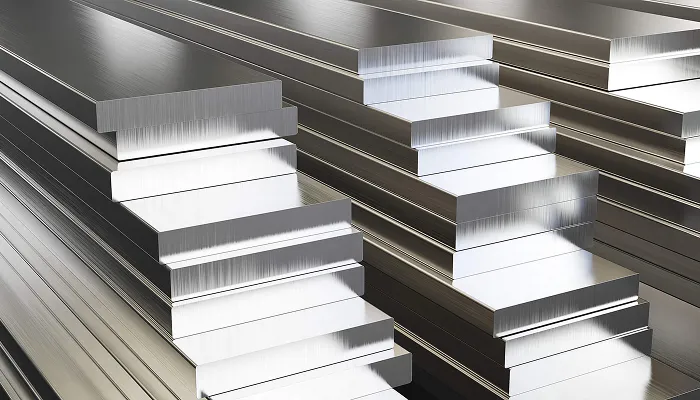
Stainless Steel Plate

  • Thickness: 6 mm and above
  • Strong, rigid, used for heavy-duty applications

Stainless Steel Coil

Continuous rolled sheet used for fabrication.

Why Thickness Matters?

Choosing the right thickness ensures:

  • Strength
  • Durability
  • Safety
  • Structural integrity
  • Proper load-bearing capacity

If thickness is too low, the plate:

  • Bends
  • Vibrates
  • Fails under pressure
  • Gets dents
  • Cracks

If thickness is too high, the plate:

  • Becomes unnecessarily expensive
  • Becomes difficult to cut
  • Adds waste

The goal is to balance strength with cost.

Standard Stainless Steel Plate Thickness Chart

Thickness Category Typical Use
0.5 – 2 mm Thin sheet Appliances, panels
2 – 6 mm Medium sheet Tanks, enclosures
6 – 12 mm Standard plate Machinery, fabrication
12 – 25 mm Heavy plate Pressure components
25 – 80 mm Extra heavy plate Structural & industrial
80+ mm Oversize plate Specialized engineering

How to Choose the Right Thickness?

Factor 1 — Load / Weight

Higher load → thicker plates

  • Structural beams, platforms, machine bases: 12–40 mm

Example: A 2 mm plate cannot support machinery vibration — but 12 mm can.

Factor 2 — Pressure

  • Tanks, vessels, reactors require 8–30 mm
  • High-pressure equipment uses 316L / Duplex plates

Factor 3 — Temperature

  • Above 400°C → use 6–30 mm
  • Above 650°C → use heat-resistant alloys (310S, Inconel)

Factor 4 — Corrosion Level

  • Use thicker material for corrosive media
  • Select better grade: 316L, Duplex, Nickel alloys

Example: Seawater → minimum 6–10 mm stainless plate.

Recommended Thickness for Common Applications

Chemical Industries

  • Reactors, tanks: 8–20 mm
  • Pipelines support plates: 6–12 mm

Oil & Gas

  • Offshore structures: 12–40 mm
  • Heat exchanger components: 8–16 mm

Food & Pharmaceutical

  • Equipment body: 2–4 mm
  • Hygienic tanks: 4–6 mm

Construction & Architecture

  • Handrails: 2–3 mm
  • Facade/Cladding: 1.5–2 mm
  • Beams/Platforms: 10–25 mm

Heavy Machinery

  • Machine bases: 20–80 mm
  • Wear-resistant plates: 12–50 mm

Grade vs Thickness — Best Combinations

  • 304 Stainless Steel: General purpose — Best: 1–8 mm
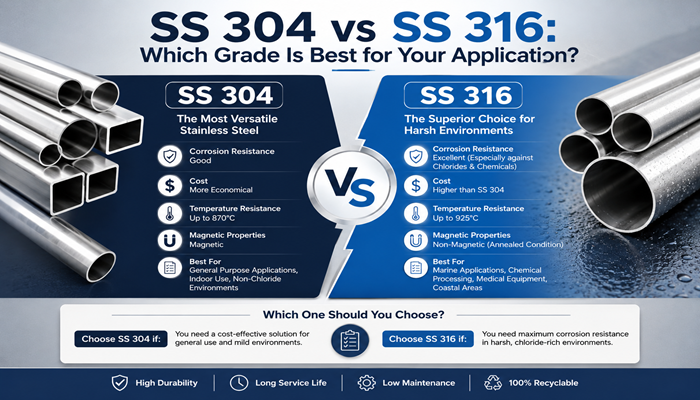
  • 316/316L: Chemical-resistant — Best: 2–20 mm
  • 310S: High temperature — Best: 4–30 mm
  • Duplex 2205: High strength — Best: 3–20 mm
  • Super Duplex 2507: Marine/offshore — Best: 4–25 mm
  • Nickel Alloys / Inconel / Monel / Hastelloy: Extreme corrosion — Best: 3–12 mm

Common Mistakes Buyers Make

  • Choosing thin material to reduce cost → causes bending & failure
  • Using thick plates unnecessarily → increases cost & machining difficulty
  • Ignoring chemical environment → corrosion risk increases
  • No consultation with a material expert → wrong grade & thickness
  • Not using certified suppliers → fake/low-grade steel

Why Moksh Tubes Is the Right Supplier

  • 304/316/310/321/347, Duplex, Super Duplex
  • Thickness from 1 mm to 100 mm
  • Coil, sheet, plate — all forms
  • MTC 3.1 / 3.2 certification
  • Cut-to-size service
  • Surface finishing (No.4, No.8, Matte, Hairline)
  • Export to 40+ countries
  • Precision cutting & CNC processing

Conclusion

Selecting the right stainless steel plate thickness is critical for performance, safety, and long-term durability. Always consider:

  • Load
  • Pressure
  • Temperature
  • Corrosion
  • Material grade

Moksh Tubes helps customers choose the perfect plate thickness based on industry requirements.

FAQ's

What thickness is best for chemical tanks?

8–20 mm depending on pressure.

Is thicker always better?

No — it increases cost unnecessarily.

Which grade is best for corrosion?

316L, Duplex, Super Duplex, Nickel Alloys.

Do you provide custom-cut plates?

Yes — laser cut, plasma cut, waterjet, CNC cut

Contact Us

At Moksh Tubes & Fittings LLP, we’re dedicated to making your purchases seamless — offering expert advice, a wide inventory of certified products, and global support for every order, large or small.

Get in Touch