Welcome to Moksh Tubes & Fittings LLP

Monday - Friday : 8:00 AM to 7:00 PM

How to Select the Right Flange Material for High-Temperature Service

How to Select the Right Flange Material for High-Temperature Service

Selecting the correct flange material for high-temperature service is one of the most critical decisions in piping design. Industries like Oil & Gas, Petrochemical, Power Generation, Boilers, Steam Plants, Chemical Processing, and Refineries operate at temperatures that can weaken metals, cause cracking, oxidation, scaling, gasket failure, and even pipeline explosions.

This guide explains, in simple engineer-friendly language:

  • Which flange materials can handle high temperature
  • Their temperature limits
  • Pros & cons
  • Best material for each application
  • Real-world selection chart

Let’s make this easy and practical.
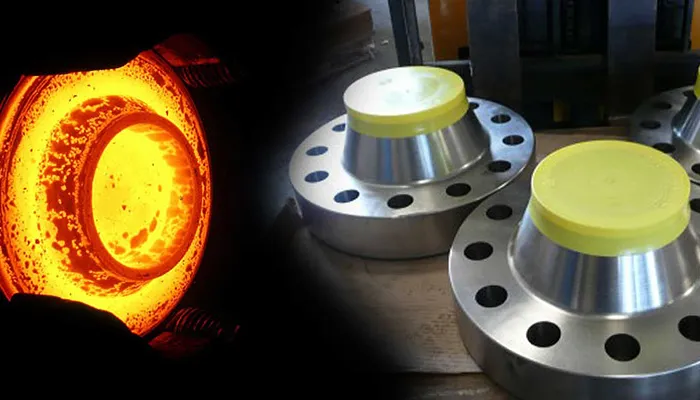
What Happens to Flanges at High Temperature?

High temperature can cause:

  • Loss of strength
  • Thermal expansion
  • Oxidation & scaling
  • Creep (slow permanent deformation)
  • Gasket leakage
  • Bolt loosening
  • Fatigue cracking

Choosing the wrong material guarantees failure. Choosing the right one ensures years of safe performance.

Best Flange Materials for High-Temperature Service

A) Alloy Steel Flanges (Best for Steam, High Temp & Pressure)

Typical Grades for High Temperature:

  • ASTM A182 F1 (up to ~500°C)
  • ASTM A182 F5 (up to ~550°C)
  • ASTM A182 F9 (up to ~600°C)
  • ASTM A182 F11 (up to ~600°C)
  • ASTM A182 F22 (up to ~625°C)
  • ASTM A182 F91 (up to ~650°C)

Why Alloy Steel is Ideal:

  • Excellent strength at high temperature
  • Great resistance to creep
  • Handles pressure + temperature together
  • Standard choice in power plants

Best For:

  • Steam lines
  • Boiler piping
  • High-temperature chemical lines
  • Turbines
  • Heat exchangers

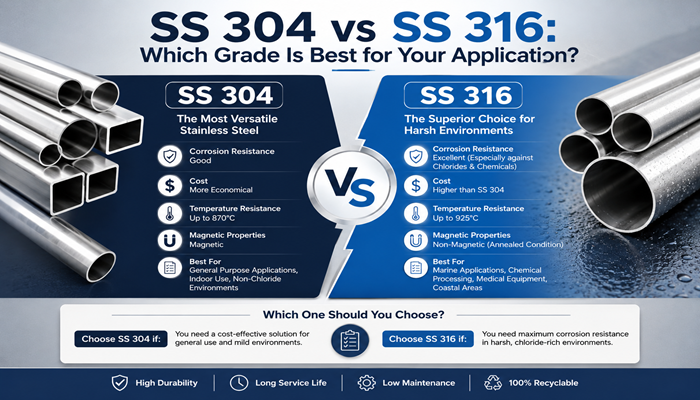
B) Stainless Steel Flanges (Best for Corrosion + Medium-High Temp)

Common Grades:

  • SS 304 / 304L
  • SS 316 / 316L
  • SS 321
  • SS 347

Temperature Limits:

  • SS 304/316 → ~425–870°C
  • SS 321 → ~870°C
  • SS 347 → ~870°C

Why Stainless Steel Works:

  • Excellent corrosion + moderate to high temperature resistance
  • No scaling at high temperature
  • SS 321 & 347 used for thermal cycling

Best For:

  • Heat exchangers
  • Chemical processing
  • Food & pharma reactors
  • Steam condensate systems

C) Nickel Alloy Flanges (Extreme Temperature + Extreme Corrosion)

Popular High-Temperature Nickel Alloys:

  • Inconel 600 (up to 1175°C)
  • Inconel 625 (up to 980°C)
  • Inconel 800 / 800H / 800HT (up to 1100°C)
  • Inconel 825
  • Hastelloy C276
  • Monel 400 / K500

Why Nickel Alloys Are the BEST:

  • Highest temperature resistance
  • Best oxidation resistance
  • Unmatched corrosion resistance
  • No creep, cracking, or embrittlement

Best For:

  • Furnaces
  • Heat-treat lines
  • High-temperature chemicals
  • Acidic & corrosive media
  • Offshore high-temperature use

D) Carbon Steel Flanges (Not for High Temp – But Important Note)

Temperature Limit: A105 flanges → max 425°C

Only suitable for low to medium temperature. Above 425°C → high risk of cracking.

Temperature-Wise Flange Material Selection Chart

Temperature Range Best Flange Material
Up to 200°C SS 304 / Carbon Steel
200–425°C SS 316 / SS 304L / A105
425–550°C Alloy Steel F5
550–600°C Alloy Steel F9 / F11
600–625°C Alloy Steel F22
625–700°C Alloy Steel F91
700–980°C Inconel 625
980–1175°C Inconel 600 / Inconel 800H/HT

Media-Wise Material Selection Guide

  • Steam: Alloy Steel F11 / F22 / F91
  • Hydrocarbon: SS 316 / Inconel 825
  • High-Chloride: Duplex / Super Duplex
  • High Temperature + Corrosion: Inconel 600/800
  • Acidic Media: Hastelloy C276
  • Seawater: Monel 400 / Duplex
  • Thermal Cycling: SS 321 / SS 347

Industry-Wise Recommendations

Power Plants

  • Alloy Steel F22 / F91

Refineries

  • SS 316L / Inconel 825

Petrochemicals

  • Alloy Steel F11 / Nickel Alloys

Fertilizer Plants

  • SS 316L / Alloy Steel

Offshore Industry

  • Super Duplex / Inconel

Gasket Compatibility for High Temperature

  • Alloy Steel: Spiral Wound Gasket
  • Stainless Steel: Graphite Gasket
  • Inconel: Metal Jacketed / RTJ Gasket

Using the wrong gasket leads to high-temperature leakage.

Why Moksh Tubes Is Trusted for High-Temperature Flanges

  • Alloy Steel F1 to F91
  • Stainless Steel 304/316/321/347
  • Duplex & Super Duplex
  • Nickel Alloys (Inconel, Monel, Hastelloy)
  • Classes 150–2500
  • CNC-machined precision flanges
  • MTC 3.1 / 3.2 Certification
  • PMI, UT & Hydro Testing
  • Export to 45+ countries
  • Custom flanges as per drawing

Conclusion

Choosing the right flange material for high-temperature service is essential for safety, zero leakage, long service life, pressure stability, and corrosion resistance.

Use this simple formula:

  • 🔥 Temperature High? → Alloy Steel
  • 🔥 Temperature + Corrosion High? → Nickel Alloys
  • 🔥 Corrosion High? → Stainless Steel or Duplex
  • 🔥 Low Temperature? → Carbon Steel

Moksh Tubes supplies certified high-temperature flanges with full testing for safe, long-term performance.

FAQ's

Which flange is best for 600°C?

Alloy Steel F22 or F91.

Which material handles extreme heat above 1000°C?

Inconel 600 / Incoloy 800H/HT.

Which is better for steam lines?

Alloy Steel F11 / F22 / F91.

Do you provide RTJ high-temp flanges?

Yes — all sizes available

Contact Us

At Moksh Tubes & Fittings LLP, we’re dedicated to making your purchases seamless — offering expert advice, a wide inventory of certified products, and global support for every order, large or small.

Get in Touch