Welcome to Moksh Tubes & Fittings LLP

Monday - Friday : 8:00 AM to 7:00 PM

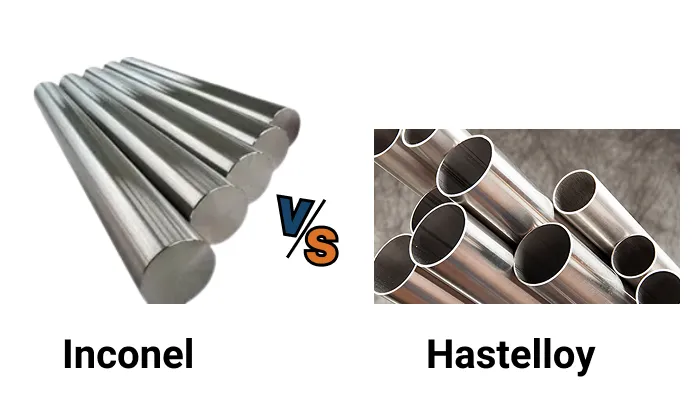
Inconel vs Hastelloy: Key Differences, Properties, and Selection Guide for High-Performance Applications

Inconel vs Hastelloy: Key Differences, Properties, and Selection Guide for High-Performance Applications

When selecting materials for high-temperature, high-pressure, and highly corrosive industrial environments, two alloy families stand out above the rest: Inconel and Hastelloy.

Both are nickel-based superalloys used in extreme applications such as jet engines, refineries, chemical reactors, offshore platforms, and power plants.

This detailed guide from Moksh Tubes & Fittings LLP compares both alloys based on:

  • Chemical composition
  • High-temperature performance
  • Corrosion resistance
  • Mechanical strength
  • Weldability
  • Applications
  • Selection guide
  • FAQs

Understanding the Two Superalloy Families

What is Inconel?

  • High temperature capability
  • High strength
  • Oxidation resistance
  • Thermal stability
  • Stress handling

Common industries:

  • Aerospace
  • Power generation
  • Oil & gas
  • Furnaces & heaters

What is Hastelloy?

  • Extreme corrosion resistance
  • Acid resistance
  • Chemical compatibility
  • Works in reducing + oxidizing environments

Common industries:

  • Chemical processing
  • Acid plants
  • Pharmaceutical reactors
  • Pollution control systems

Chemical Composition Differences

Inconel 625 Composition

  • Nickel: 58%
  • Chromium: 20–23%
  • Molybdenum: 8–10%
  • Niobium: 3–4%

Hastelloy C276 Composition

  • Nickel: 57%
  • Chromium: 15–17%
  • Molybdenum: 15–17%
  • Tungsten: 3–4%

Key Differences:

  • Hastelloy has higher Mo + W → extreme corrosion resistance.
  • Inconel has higher Cr + Nb → superior high-temp strength & stability.

High-Temperature Resistance

Inconel (625 / 718 / 600):

  • Stable up to 1000–1200°C
  • Exceptional oxidation resistance
  • High creep strength
  • Ideal for turbines, jet engines, furnaces

Hastelloy (C276 / C22):

  • Heat resistant up to ~950°C
  • Loses mechanical strength above 900°C

Winner (High Temperature): Inconel

Corrosion Resistance

Hastelloy advantages:

  • Exceptional resistance to strong acids (HCl, H₂SO₄, HF, HNO₃)
  • Excellent pitting & crevice corrosion resistance
  • Works in oxidizing & reducing media

Inconel corrosion performance:

  • Excellent overall
  • Very strong in chlorides (625)
  • Strong in sulfuric acid (825)
  • But generally < Hastelloy in extreme acids

Winner (Corrosion): Hastelloy

Strength & Mechanical Performance

Inconel 718:

  • Tensile Strength: 1275 MPa
  • Yield Strength: 1035 MPa
  • Hardness: 36–44 HRC

Inconel 625:

  • Tensile Strength: 690 MPa

Hastelloy C276:

  • Tensile Strength: ~690 MPa
  • Yield Strength: ~283 MPa

Conclusion: Inconel 718 is significantly stronger than Hastelloy.

Oxidation & Thermal Stability

Inconel offers:

  • High-temperature oxidation resistance
  • Scaling resistance
  • Thermal fatigue resistance
  • Creep resistance

Winner: Inconel

Weldability

Inconel:

  • 625 → Good weldability
  • 718 → Difficult, requires PWHT

Hastelloy C276:

  • Excellent weldability
  • Lower hot cracking risk

Winner: Hastelloy C276

Cost Comparison

Typically:

  • Hastelloy C276 → Highest cost
  • Inconel 625 → Moderate
  • Inconel 718 → Lower than both (mass-use alloy)

Application Comparison

Where Inconel Is Better

  • Jet engines
  • Turbines
  • Furnace components
  • Exhaust systems
  • Nuclear systems
  • High-temp valves
  • Downhole tools

Where Hastelloy Is Better

  • Acid plants
  • Chemical reactors
  • Pollution control
  • Wet chlorine systems
  • Pickling lines
  • Pharmaceutical equipment

Summary Comparison Table

Property Inconel Hastelloy
High-Temp Strength⭐⭐⭐⭐⭐⭐⭐⭐
Corrosion Resistance⭐⭐⭐⭐⭐⭐⭐⭐⭐
Oxidation Resistance⭐⭐⭐⭐⭐⭐⭐⭐
Weldability⭐⭐⭐⭐⭐⭐⭐
Cost⭐⭐⭐⭐⭐⭐⭐
Best ForHigh-temperatureExtreme corrosion

Which Alloy Should You Choose?

Choose Inconel If:

  • High-temperature strength is required
  • Component faces thermal cycling
  • Operating temp > 850°C
  • Mechanical load is high
  • Used in aerospace, power plants, turbines

Choose Hastelloy If:

  • You need extreme acid resistance
  • Component faces HF, HCl, sulfuric acid
  • Operating in harsh chemical media
  • Pitting/crevice corrosion risk is high
  • Used in chemical or pharmaceutical plants

FAQ's

Which alloy is better overall?

Neither. Choose based on environment → Heat (Inconel), Corrosion (Hastelloy).

Is Hastelloy stronger than Inconel?

No. Inconel 718 is much stronger.

Which alloy is best for seawater?

Inconel 625 performs excellently. Hastelloy C276 also works, but Inconel is more cost-effective.

Which alloy handles acids better?

Hastelloy C276 → king of acid resistance.

Which alloy is cheaper?

Inconel is generally cheaper than Hastelloy.

Contact Us

At Moksh Tubes & Fittings LLP, we’re dedicated to making your purchases seamless — offering expert advice, a wide inventory of certified products, and global support for every order, large or small.

Get in Touch