Welcome to Moksh Tubes & Fittings LLP

Monday - Friday : 8:00 AM to 7:00 PM

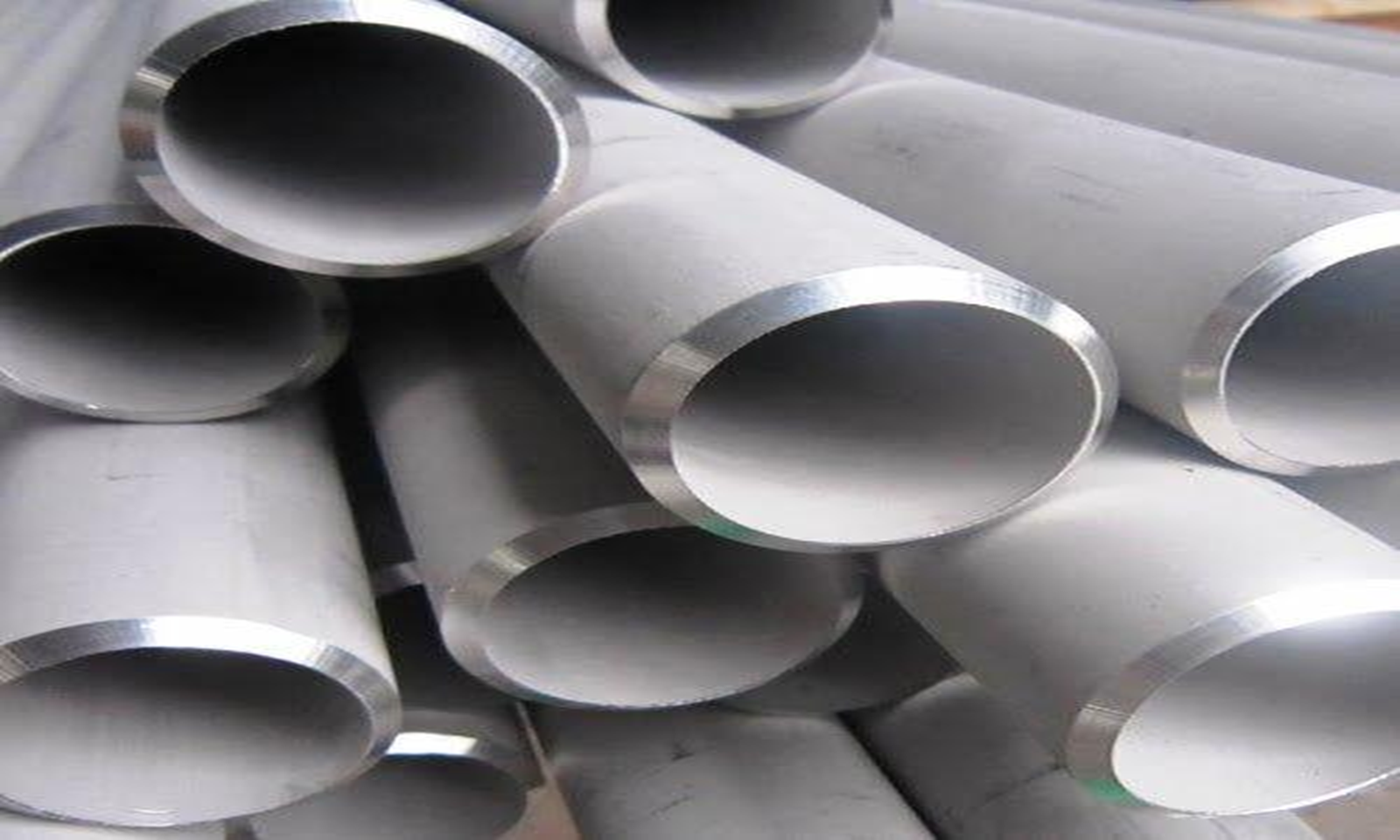
Seamless Tube Manufacturing Process – From Raw Material to Final Product

Seamless Tube Manufacturing Process – From Raw Material to Final Product

Seamless tubes are the backbone of high-pressure, high-temperature applications in:

  • Boilers
  • Heat exchangers
  • Chemical plants
  • Oil & gas pipelines
  • Refineries
  • Power plants
  • Automotive hydraulics

They are known for:

  • No weld
  • No weak point
  • High strength
  • High pressure resistance

This blog explains the complete step-by-step seamless tube manufacturing process in simple English, with visuals.
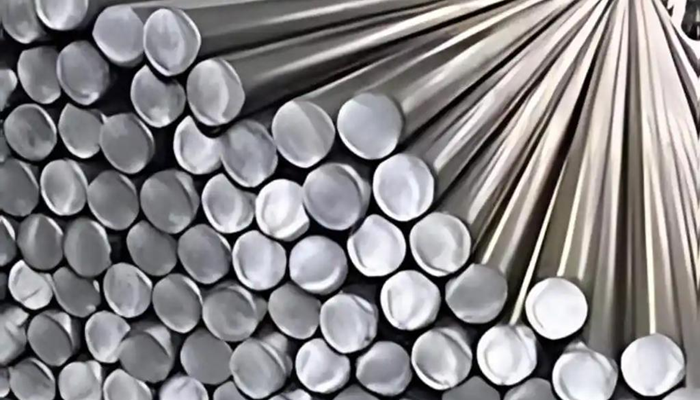
Raw Material – Round Billets

The seamless tube journey starts with a solid round billet, usually made of:

  • Carbon Steel
  • Stainless Steel
  • Alloy Steel
  • Duplex / Super Duplex
  • Nickel Alloys

Billets are cut into required lengths (typically 600–1600 mm).

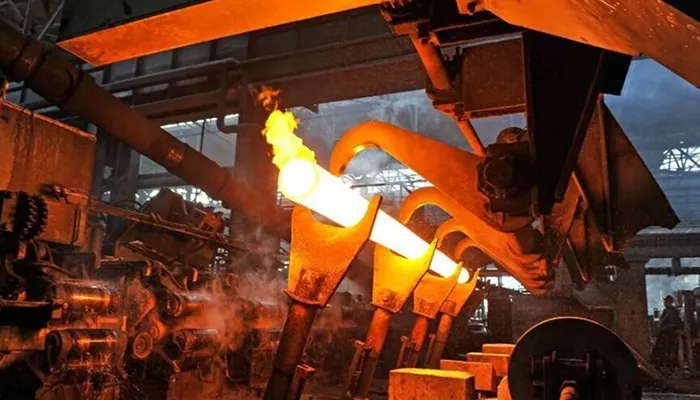
Heating the Billet (Rotary Furnace)

Billets are heated to 1100–1300°C inside a rotary hearth furnace.

Why heat?

  • Makes the billet soft
  • Allows piercing
  • Reduces cracking risk

Heating is carefully controlled using temperature sensors.

Piercing the Billet (Mannesmann Piercing)

(Most important step)

The hot billet is passed between two rotating conical rollers with a piercing mandrel.

Result:

  • A hollow tube shell is created
  • No welding needed
  • Smooth inner diameter

This is what makes seamless tubes different from welded tubes.

Elongation & Rolling (Plug Mill / Pilger Mill / Mandrel Mill)

Based on final size, the hollow shell goes through:

  • Plug Mill – medium-thick tubes
  • Mandrel Mill – long-length & high precision
  • Pilger Mill – thin-wall, high-accuracy tubes

During rolling:

  • The tube is stretched
  • Wall thickness is reduced
  • Length increases
  • Dimensions become uniform

This is where OD & thickness are controlled.

Sizing / Reducing Mill

The tube passes through rollers to:

  • Correct outer diameter
  • Improve roundness
  • Adjust wall thickness
  • Achieve final dimensions

This ensures tight tolerances.

Heat Treatment

Heat treatment depends on material:

  • Carbon Steel → Normalizing
  • Alloy Steel → Quenching & Tempering
  • Stainless Steel → Solution Annealing
  • Duplex → Annealing

Purpose:

  • Improve mechanical properties
  • Remove stress
  • Improve corrosion resistance

Straightening the Tube

After heat treatment, the tube may bend slightly.

Straightening machines ensure:

  • Perfect alignment
  • Better roundness
  • Uniformity

Cutting to Length

Tubes are cut into required lengths:

  • 4 meters
  • 6 meters
  • 12 meters
  • Custom lengths

Testing & Inspection

High-quality seamless tubes must undergo strict testing:

Non-Destructive Tests (NDT)

  • Ultrasonic Testing (UT)
  • Eddy Current Test
  • Radiography (RT)
  • Hydrostatic Test

Destructive Tests

  • Tensile
  • Flattening
  • Flaring

Additional Tests

  • PMI
  • Hardness
  • ID/OD measurement

Moksh Tubes follows ASTM, ASME, EN, and API standards.

Surface Finishing

Finishing options include:

  • Pickling & passivation
  • Cold drawing (bright)
  • Polishing
  • Coating (for carbon steel)

Improves appearance & corrosion resistance.

Final Inspection & Packaging

Final checks include:

  • Dimensional check
  • Visual inspection
  • Thickness measurement
  • MTC documentation

Packing options:

  • Bundles
  • Wooden boxes
  • Crates
  • Export wrapping

Then shipped worldwide.

Applications of Seamless Tubes

Used in:

  • Boilers
  • Heat exchangers
  • Superheaters
  • Condensers
  • Oil & gas pipelines
  • Mechanical engineering
  • Hydraulic cylinders
  • Petrochemical plants

Known for zero weld weakness & high pressure resistance.

Why Choose Moksh Tubes?

  • ASTM A106, A53, A179, A192, A213, A335, A333
  • Carbon Steel, Stainless Steel, Alloy Steel, Duplex, Nickel
  • U-Bend seamless tubes
  • Hydro & NDT tested
  • ISO & PED certified
  • Exports to 40+ countries
  • Fast delivery & cut-to-length

Trusted globally for strength & reliability.

Conclusion

The seamless tube manufacturing process is a combination of:

  • Precision
  • High-temperature rolling
  • Expert metallurgy
  • Advanced testing

This makes seamless tubes strong, leak-proof, and ideal for extreme conditions.

Moksh Tubes supplies fully-tested seamless tubes for boilers, heat exchangers, chemical plants, and oil & gas applications.

FAQ's

Why are seamless tubes stronger?

Because they have no welded seam — no weak point.

Which piercing process is used?

Mannesmann rotary piercing.

Are seamless tubes better than welded?

Yes — especially for high pressure and high temperature.

Do you supply U-bend seamless tubes?

Yes — in SS, Alloy Steel, Duplex & Nickel Alloys.

Contact Us

At Moksh Tubes & Fittings LLP, we’re dedicated to making your purchases seamless — offering expert advice, a wide inventory of certified products, and global support for every order, large or small.

Get in Touch