Seawater is one of the most aggressive natural environments due to its high chloride content,
oxygen levels, biological organisms, and fluctuating temperatures.
Most stainless steels — even high grades like 316L — fail rapidly in seawater.
This is where Super Duplex Stainless Steel stands out.
Grades like Super Duplex 2507 (S32750) and S32760 offer exceptional resistance to:
• Chloride pitting
• Stress corrosion cracking
• Crevice corrosion
• Erosion–corrosion
• Warm seawater
• High pressure + dynamic loads
In this expert guide, you’ll understand why Super Duplex is the No.1 choice for marine, offshore,
and subsea engineering in 2025.

-
Call Us On
+91 97695 84950
-
Mail Us @
[email protected]
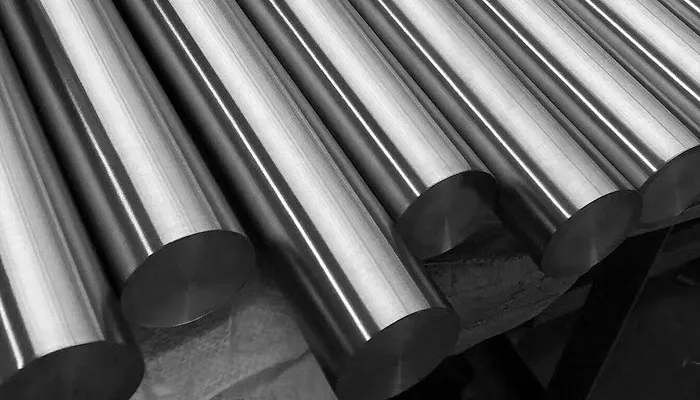
Super Duplex in Seawater 2025 | Offshore Performance Guide
Looking for a Reliable Metal Supplier?
Get premium quality pipes, sheets, and fittings delivered globally.
Why Super Duplex Performs Exceptionally in Seawater
Super Duplex grades contain:
- 25–26% Chromium (Cr)
- 3.5–4% Molybdenum (Mo)
- 0.30% Nitrogen (N)
This results in:
- ✔ PREN > 42 (Elite corrosion resistance)
- ✔ Strong resistance to chloride pitting
- ✔ Excellent resistance to stress corrosion cracking
- ✔ High mechanical strength (double that of 316L)
- ✔ Superior performance in high-salinity, warm seawater
These properties make Super Duplex ideal for aggressive seawater and offshore environments.
Offshore Oil & Gas: The Biggest User
Offshore oil and gas systems face:
- High pressure
- High chloride seawater
- Sour service (H₂S + CO₂)
- Dynamic loading & vibration
- High flow velocities
Super Duplex is used for:
- Subsea valves & manifolds
- Riser systems
- Xmas trees (wellhead assemblies)
- Pumps & seawater injection systems
- Heat exchangers
- Offshore structural components
Seawater Cooling & Marine Engineering
Marine environments expose materials to continuous chloride attack.
Super Duplex is used in:
- Seawater cooling systems
- Ship propeller shafts
- Ballast water systems
- Heat exchangers
- Hull components
- Desalination modules
Its high flow resistance makes it ideal for pump impellers and piping exposed to fast-moving seawater.
Desalination Plants (RO, MED, MSF)
Desalination environments contain:
- Hot brine
- Chloride-rich water
- High pressure steam
- Acid cleaning cycles
Super Duplex excels in:
- Brine heaters
- Heat exchangers
- Concentrate lines
- Evaporator tubes
- Reverse osmosis piping
Erosion–Corrosion Resistance
Super Duplex stainless steels handle high-velocity seawater without degradation due to high resistance to:
- Particle erosion
- Cavitation
- Turbulent flow
This makes them ideal for pumps, impellers, and subsea components operating under extreme conditions.
Conclusion
Super Duplex stainless steels are the ultimate choice for seawater and offshore environments.
Their outstanding resistance to chlorides, high mechanical strength, and long-term stability make them
indispensable for:
• Marine engineering
• Offshore oil & gas
• Desalination systems
For reliable Super Duplex materials — pipes, tubes, fittings, flanges, and custom components —
Moksh Tubes & Fittings LLP delivers certified, high-performance solutions
across global industries.
Need Custom Dimensions or Rare Alloys?
We provide specialized fabrication, custom cutting, and export-grade packing globally. Request a quote or chat with our experts.
FAQ's
Can Super Duplex be used for 100% seawater immersion?
Yes. Super Duplex 2507 and S32760 are specifically designed for continuous exposure to seawater, even in warm conditions.
What makes Super Duplex better than 316L for offshore?
2X–3X strength Much higher pitting resistance Resistance to SCC (stress corrosion cracking) Longer life in chlorides
Does Super Duplex work in sour service (H₂S)?
Yes — with NACE MR0175 compliance, Super Duplex performs very well in sour conditions.
Is Super Duplex affected by flow rate or turbulence?
No. It has superior erosion–corrosion resistance, making it suitable for high flow seawater and abrasive environments.
What is the biggest advantage of Super Duplex in marine use?
Its high PREN value (>42) gives it unmatched protection against chloride pitting and crevice corrosion, ensuring long-term durability.
Recent Blogs
-
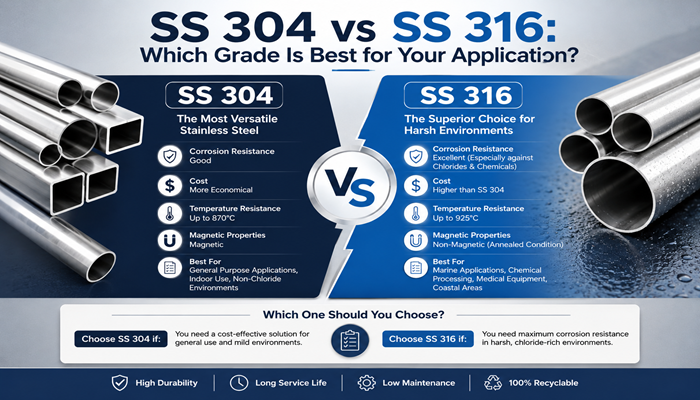
SS 304 vs SS 316: Which Grade Is Best for Your Application?
August 19, 2026
-
-
Locate Us
Office Address: Hinglaj Bhavan, Gulalwadi Mumbai, Maharashtra. 400004
Office Address: 6/A, Ground Floor, Rajwanti Mansion, Khetwadi Mumbai
Office Address: 95/95A, Dawood Baug, Sukhlaji Street, Kamatipura Mumbai
Office Address: 92E, Plot No. 3, New Tank Bunder, Darukhana, Mumbai, Maharashtra- 400 010.
get in touch
Let’s forge a connection — contact our team today.
Contact Us
At Moksh Tubes & Fittings LLP, we’re dedicated to making your purchases seamless — offering expert advice, a wide inventory of certified products, and global support for every order, large or small.
Get in Touch