Welcome to Moksh Tubes & Fittings LLP

Monday - Friday : 8:00 AM to 7:00 PM

Top 10 Hard-to-Find Alloys Every Engineer Should Know in 2025

Top 10 Hard-to-Find Alloys Every Engineer Should Know in 2025

In aerospace, defence, chemical, nuclear, marine, and high-pressure engineering — the biggest challenge is finding materials that can survive extreme conditions where normal metals fail. This is why industries depend on hard-to-find and special alloys. These alloys are:

  • Rare
  • Expensive
  • Difficult to source
  • Produced by limited mills
  • Certification-heavy
  • Application-specific

But they offer unmatched performance, making them essential for modern engineering. This guide covers the Top 10 Hard-to-Find Alloys Every Engineer Should Know in 2025, including their properties, applications, and advantages — written to strengthen your website’s authority and SEO.
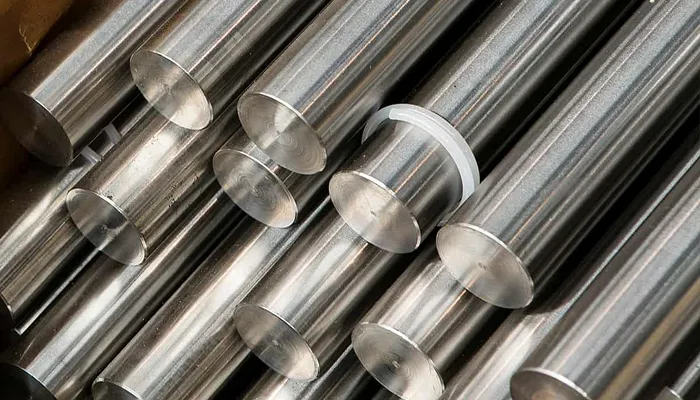
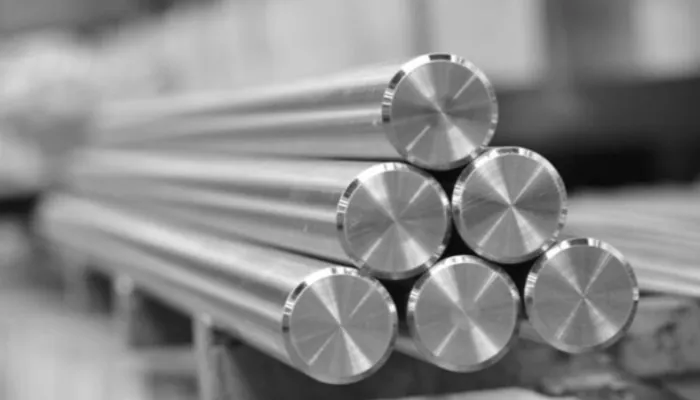
Beryllium Copper (BeCu) — The Strongest Copper Alloy

Key Properties

  • Extremely high strength (up to 1400 MPa)
  • Non-magnetic
  • Excellent fatigue resistance
  • High conductivity

Applications

  • Aerospace connectors
  • Defence components
  • Oil & gas downhole tools
  • Springs & electrical contacts

Why Hard-to-Find?

Export restrictions + limited global mills.

Titanium Grade 5 (Ti-6Al-4V) — Aerospace Standard

Properties

  • Strong as steel but 45% lighter
  • Excellent fatigue resistance
  • Corrosion proof

Applications

  • Jet engines
  • Medical implants
  • Subsea equipment

Why Hard-to-Find?

Aerospace certification requirements + global titanium shortage.

Zirconium 702/705 — Chemical Processing Champion

Properties

  • Unmatched corrosion resistance in acids
  • Non-reactive to most chemicals
  • High-temperature stability

Applications

  • Acid reactors
  • Heat exchangers
  • Nuclear fuel cladding

Why Hard-to-Find?

Limited producers + used mostly in nuclear/chemical sectors.

Tantalum — Second Only to Platinum in Corrosion Resistance

Properties

  • Immune to almost all acids
  • Melting point: 3017°C
  • High ductility

Applications

  • Chemical processing
  • Semiconductors
  • Aerospace components

Why Hard-to-Find?

One of the rarest metals on Earth.

Haynes 230 / 188 / 263 — High-Temperature Superalloys

Properties

  • Survive 1100–1150°C
  • Resist oxidation, carburization, nitridation
  • Outstanding creep resistance

Applications

  • Jet engines
  • Gas turbines
  • Furnaces

Why Hard-to-Find?

Cobalt and tungsten pricing + specialized production.

MP35N — Ultra High Strength Alloy

Properties

  • Exceptional strength
  • Corrosion resistance in sour gas
  • Bio-compatible

Applications

  • Subsea equipment
  • Medical implants
  • Aerospace fasteners

Why Hard-to-Find?

Complex multi-stage processing + aerospace certification.

Inconel 718 / 625 — Industry Workhorses

Properties

  • High strength
  • Corrosion and heat resistant
  • Weldable

Applications

  • Aerospace
  • Oil & gas
  • Downhole tools

Why Hard-to-Find?

Global nickel supply constraints.

Aluminium Bronze (C95400 / C95800)

Properties

  • High strength
  • Outstanding seawater corrosion resistance
  • Anti-galling & anti-biofouling

Applications

  • Propellers
  • Pump hardware
  • Marine valves

Why Hard-to-Find?

High demand in shipbuilding + limited mills.

Super Duplex & Hyper Duplex Stainless Steels

Properties

  • Very high strength
  • Exceptional chloride corrosion resistance
  • Good weldability

Applications

  • Offshore platforms
  • Subsea piping
  • Heat exchangers

Why Hard-to-Find?

Strict PREN requirements and limited global stock.

Tungsten & Tungsten Heavy Alloys

Properties

  • Melting point 3422°C
  • Highest tensile strength at high temperature
  • Non-magnetic

Applications

  • Aerospace shielding
  • Furnace parts
  • Defence systems

Why Hard-to-Find?

High-cost raw materials + difficult refining process.

Why Hard-to-Find Alloys Are Essential in 2025

  • Technology pushing limits (aerospace, EV, hydrogen)
  • Extreme environmental conditions
  • Safety-critical applications
  • Long-term reliability requirements
  • Reduced downtime saves millions

Special alloys increase performance, safety, and service life.

FAQ's

Why are special alloys expensive?

Rare metals + complex manufacturing + aerospace-level certification.

Which alloy is best for extreme chemical corrosion?

Tantalum, Zirconium, Hastelloy C276.

What alloy is best for aerospace?

Titanium Grade 5, Haynes 188/263, Inconel 718.

What is the strongest nickel alloy?

MP35N and Inconel 718 are among the strongest.

Do special alloys require testing?

Yes — often UT, PMI, hardness, mechanical, and chemical certifications.

Contact Us

At Moksh Tubes & Fittings LLP, we’re dedicated to making your purchases seamless — offering expert advice, a wide inventory of certified products, and global support for every order, large or small.

Get in Touch