Welcome to Moksh Tubes & Fittings LLP

Monday - Friday : 8:00 AM to 7:00 PM

Types of Pipe Fittings – A Simple Guide for Engineers & Buyers

Types of Pipe Fittings – A Simple Guide for Engineers & Buyers

Pipe fittings are the backbone of every piping system. Whether you’re building a chemical plant, refinery, HVAC system, fire line, or a fabrication project, choosing the right fittings ensures proper flow, safety, and long-term performance.

But beginners — and even many engineers — often get confused between elbows, tees, reducers, couplings, unions, caps, and bends.

This guide explains each fitting in clear, simple, human-friendly language.
Elbows (45°, 90°, 180°)

Elbows change the direction of flow in a pipeline. The most common angles are 45°, 90°, and 180°.

Where They Are Used:

  • Chemical plants
  • Water lines
  • HVAC
  • Steam systems

Types:

  • Short radius (for tight spaces)
  • Long radius (for smoother flow)

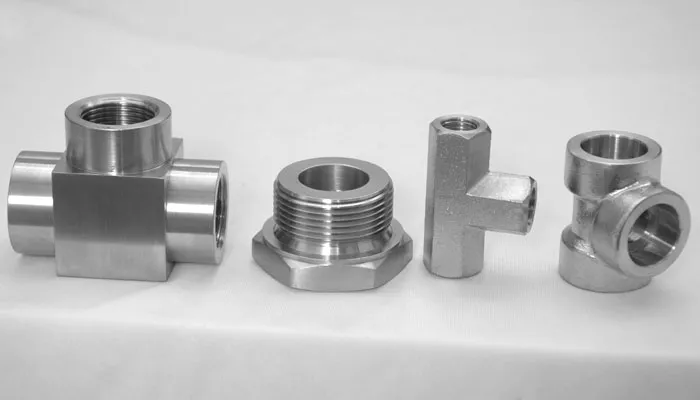
Tees (Equal & Reducing)

Tees are used to divide or combine flow in a piping system.

Equal Tee: All three sides are the same size.

Reducing Tee: One branch is smaller—useful for controlled flow.

Applications:

  • Branch lines
  • Distribution pipelines
  • Chemical injection points

Reducers (Concentric & Eccentric)

Reducers help transition between different pipe sizes.

Concentric Reducer: Cone-shaped, used where the pipe is centered.

Eccentric Reducer: One side is flat—ideal for pumps to prevent air pockets.

Where They Are Used:

  • Pump suction
  • Energy systems
  • Fluid control lines

Couplings & Unions

Coupling: Permanently joins two pipes.

Union: Used when frequent disassembly is needed.

Used In:

  • Plumbing
  • Firefighting
  • Instrumentation
  • Utility pipelines

Caps & Plugs

Caps and plugs are used to close the end of a pipe system.

Uses:

  • Testing
  • Maintenance
  • Isolation
  • Dead-end lines

Bends (Long Radius & Custom)

Bends provide smoother direction change compared to elbows.

Why Use Bends?

  • Lower pressure drop
  • Better flow
  • Less turbulence

Mostly Used In:

  • Refineries
  • Petrochemicals
  • Large radius piping

Why Correct Fitting Selection Matters

Choosing the wrong fitting can cause:

  • Flow restriction
  • Pressure loss
  • Pump damage
  • Leakage or failure
  • Costly downtime

Correct fittings ensure:

  • Smooth flow
  • Long system life
  • Safety & compliance
  • Proper pressure balance

Materials Used for Pipe Fittings

  • Stainless Steel (304, 316, 321): For water, food, pharma, and chemical use.
  • Alloy Steel (A234 WP22, WP5): For high-temperature, high-pressure service.
  • Carbon Steel (A234 WPB): For general & low-pressure usage.
  • Nickel Alloys (Inconel, Monel, Hastelloy): For extreme corrosion conditions.

Why Moksh Tubes Is a Trusted Supplier

  • 15+ years of experience
  • Full range: elbows, tees, reducers, bends, caps, couplings, unions
  • Stainless, Alloy Steel, Carbon Steel, Duplex, Super Duplex
  • Testing: PMI, UT, Hydro Test, DP Test
  • MTC 3.1 / 3.2 provided
  • Export to 45+ countries
  • Custom fittings available

Conclusion

Pipe fittings may look simple, but choosing the right type is crucial for flow control, pressure management, and system reliability.

If you want help selecting the perfect fittings for your project, the Moksh Tubes technical team can guide you based on pressure, temperature, media, and design requirements.

FAQ's

Which fitting is used to change pipe direction?

Elbows and bends.

Which fitting reduces pipe size?

Reducers (concentric or eccentric).

Which fitting makes a branch line?

Tees.

Which is better for pumps — concentric or eccentric reducer?

Eccentric reducer.

Contact Us

At Moksh Tubes & Fittings LLP, we’re dedicated to making your purchases seamless — offering expert advice, a wide inventory of certified products, and global support for every order, large or small.

Get in Touch