Welcome to Moksh Tubes & Fittings LLP

Monday - Friday : 8:00 AM to 7:00 PM

Why Zirconium Is an Underrated Metal for Extreme Corrosion & High-Purity Applications (2025 Guide)

Why Zirconium Is an Underrated Metal for Extreme Corrosion & High-Purity Applications (2025 Guide)

In 2025, global industries are facing tougher challenges than ever before — higher temperatures, stronger acids, more aggressive chemicals, and stricter purity standards. This has pushed engineers and procurement teams to search for metals that deliver long-term reliability without failure.

One such metal is Zirconium — a material often overlooked, yet unmatched in specific industrial environments. Zirconium is known for extraordinary corrosion resistance, compatibility with strong acids, excellent performance in high‑purity systems, stability in nuclear and high‑temperature environments, and a long service life with minimal maintenance.

Despite being less common than stainless steels or nickel alloys, Zirconium has quietly become a game‑changer for chemical processors, nuclear engineers, pharmaceutical manufacturers, and high‑purity equipment designers. This complete industry guide explains why Zirconium is the most underrated but essential metal in 2025.
What Makes Zirconium Special?

Zirconium’s popularity comes from its combination of rare properties. Unlike stainless steel or even nickel alloys, Zirconium forms a strong and stable oxide film (ZrO₂) on its surface. This oxide layer provides:

  • Resistance to strong acids
  • Excellent corrosion resistance in high-chloride environments
  • Outstanding durability in high‑purity water systems
  • Biocompatibility
  • High‑temperature stability

It behaves like a super metal, performing where stainless steel, Duplex, Hastelloy, and even titanium may fail.

Zirconium Compared to Other Metals

Zirconium vs Stainless Steel

  • Superior resistance to acids
  • No pitting in strong chlorides
  • Longer lifespan in harsh chemical plants

Zirconium vs Titanium

  • Titanium performs well in seawater but struggles with fluorides and strong reducing acids
  • Zirconium performs better in chloride‑rich and aggressive acid systems

Zirconium vs Nickel Alloys

  • Nickel alloys like C276 or 625 are corrosion‑resistant but extremely expensive
  • Zirconium offers equal or better resistance in many acid systems
  • Lower lifecycle cost compared to nickel alloys

Industries Using Zirconium

Chemical Processing

Zirconium is widely used due to exceptional resistance to strong acids and chloride solutions.

  • Reactors
  • Heat exchangers
  • Evaporators
  • Acid circulation lines
  • Distillation equipment

Pharmaceutical & High‑Purity Systems

Zirconium does not shed metal ions, making it ideal for ultra‑clean applications.

  • High‑purity water systems
  • API manufacturing
  • Biopharma processing

Nuclear Industry

Its extremely low neutron absorption makes Zirconium essential for nuclear fuel and reactor components.

Aerospace & High‑Temperature Systems

Zirconium maintains stability and strength at elevated temperatures.

  • Thermal barriers
  • High‑temperature tubing
  • Specialized aerospace components

Power Generation & Desalination

Performs exceptionally in hot brine and high‑chloride water systems.

  • Condensers
  • Brine heaters
  • Cooling systems

Zirconium in Corrosive Environments

  • Resists boiling hydrochloric acid
  • Performs well in sulfuric acid at high concentration and temperature
  • Excellent resistance in nitric acid
  • Outstanding resistance to pitting and crevice corrosion caused by chlorides
  • Strong performance in organic acids such as acetic and formic acid

Overall, Zirconium offers corrosion resistance unmatched by nearly all engineering metals.

Common Zirconium Grades

  • Zirconium 702 – High corrosion resistance and good ductility
  • Zirconium 705 – Alloyed with niobium for higher strength and erosion‑corrosion resistance

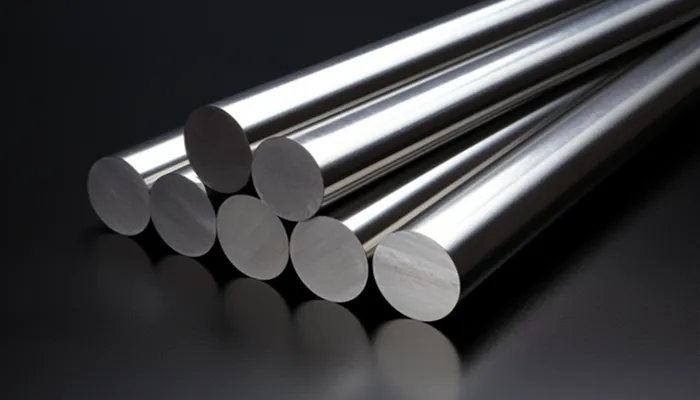
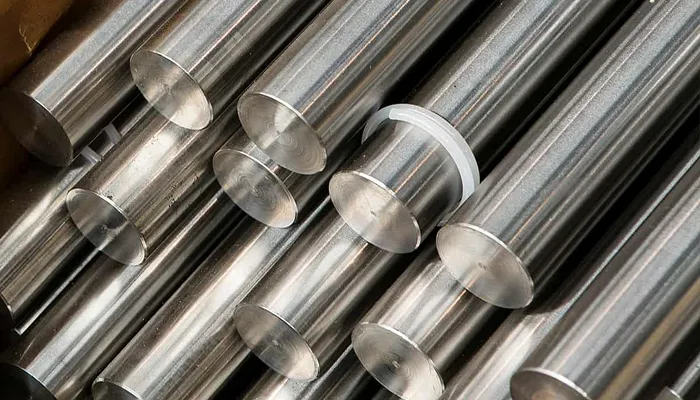
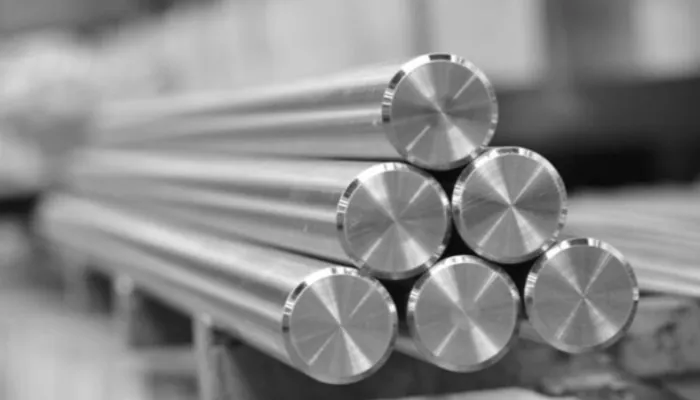
Available in pipes, tubes, sheets, bars, fittings, and custom fabrications.

Advantages of Zirconium

  • Superior corrosion resistance
  • Lower maintenance and replacement cost
  • Exceptional lifespan
  • Lightweight compared to nickel alloys
  • High purity and minimal contamination
  • Excellent thermal stability

Long-Term Cost Benefits

Zirconium may cost more initially but saves significantly by preventing shutdowns, corrosion failures, and frequent replacements.

It is one of the most cost‑effective metals for aggressive chemical environments.

Conclusion

Zirconium is one of the most powerful and underrated metals in engineering. With unmatched resistance to strong acids, high temperatures, and chloride‑rich conditions, it has become indispensable for chemical processing, pharmaceuticals, nuclear systems, high‑purity water, aerospace, and desalination. For industries where corrosion failure is not an option, Zirconium delivers exceptional performance and long‑term value.

FAQ's

Is Zirconium better than Titanium for corrosion?

Yes — especially in chloride-rich acids and boiling HCl, where Titanium fails.

Is Zirconium safe for pharmaceutical and food applications?

Absolutely. It has excellent biocompatibility and does not contaminate products.

Why is Zirconium used in nuclear reactors?

Initial cost is higher, but lifecycle cost is far lower due to long equipment life and negligible maintenance.

Contact Us

At Moksh Tubes & Fittings LLP, we’re dedicated to making your purchases seamless — offering expert advice, a wide inventory of certified products, and global support for every order, large or small.

Get in Touch
{ "@context": "https://schema.org", "@type": "FAQPage", "mainEntity": [ { "@type": "Question", "name": "Is Zirconium better than Titanium for corrosion?", "acceptedAnswer": { "@type": "Answer", "text": "Yes. Zirconium outperforms Titanium in chloride-rich acids, boiling HCl and high-purity chemical systems where Titanium fails." } }, { "@type": "Question", "name": "Is Zirconium safe for pharmaceutical and food applications?", "acceptedAnswer": { "@type": "Answer", "text": "Yes. Zirconium has excellent biocompatibility and does not contaminate high-purity or pharmaceutical-grade products." } }, { "@type": "Question", "name": "Why is Zirconium used in nuclear reactors?", "acceptedAnswer": { "@type": "Answer", "text": "Because Zirconium has extremely low neutron absorption, making it ideal for nuclear fuel cladding and reactor components." } }, { "@type": "Question", "name": "Does Zirconium resist pitting corrosion?", "acceptedAnswer": { "@type": "Answer", "text": "Yes. Zirconium has exceptional resistance to pitting and crevice corrosion, outperforming stainless steels and many nickel alloys." } }, { "@type": "Question", "name": "Is Zirconium expensive?", "acceptedAnswer": { "@type": "Answer", "text": "Initial cost is higher, but lifecycle cost is far lower due to very long equipment life, minimal maintenance and excellent corrosion resistance." } } ] } { "@context": "https://schema.org", "@type": "Article", "headline": "Why Zirconium Is the Most Underrated Metal for Extreme Corrosion & High-Purity Applications in 2025", "description": "A complete industry guide to Zirconium metal, its corrosion resistance, applications, advantages, and comparison with stainless steel, titanium and nickel alloys.", "author": { "@type": "Organization", "name": "Moksh Tubes & Fittings LLP" }, "publisher": { "@type": "Organization", "name": "Moksh Tubes & Fittings LLP", "logo": { "@type": "ImageObject", "url": "https://mokshtubes.com/logo.png" } }, "url": "https://mokshtubes.com/zirconium-guide-2025-corrosion-high-purity", "mainEntityOfPage": "https://mokshtubes.com/zirconium-guide-2025-corrosion-high-purity", "articleSection": "Zirconium Series", "keywords": "Zirconium metal, Zirconium corrosion resistance, Zirconium tubes, Zirconium vs titanium, Zirconium 702, Zirconium 705" }