Welcome to Moksh Tubes & Fittings LLP

Monday - Friday : 8:00 AM to 7:00 PM

Zirconium vs Titanium vs Hastelloy: Which Material Performs Best in Chemical & High-Chloride Environments? (2025 Guide)

Zirconium vs Titanium vs Hastelloy: Which Material Performs Best in Chemical & High-Chloride Environments? (2025 Guide)

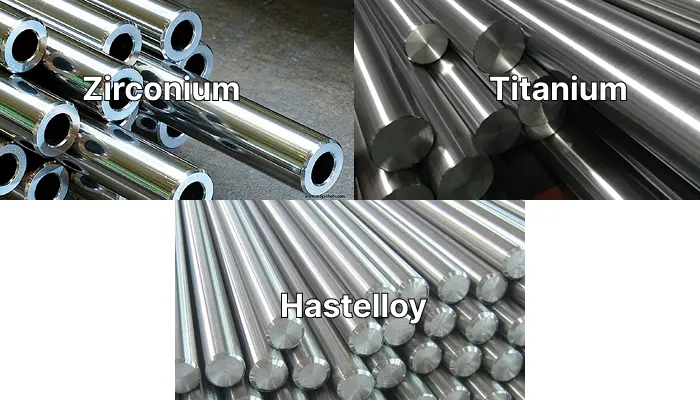
Chemical plants, acid manufacturing units, desalination facilities, nuclear processing, high-purity systems, and petrochemical industries in 2025 all face a similar problem: Which metal can survive the most aggressive acids, chlorides, heat, and pressure—without failing? Three premium materials dominate this segment:

  • Zirconium
  • Best for extreme acids, chlorides, and high-purity systems.
  • Titanium
  • Best for seawater and moderate corrosive environments.
  • Hastelloy (C276, C22, B2, etc.)
  • Best for extreme chemical conditions & reducing acids.
  • Costly shutdowns
  • Catastrophic corrosion failures
  • Contamination of high-purity processes
  • Safety risks
  • Reduced equipment life

This full comparison guide explains which material is best for your application, based on real industrial performance—not theory.
Chemical Composition — A Quick Comparison

  • Zirconium 702 / 705 — Zr + Nb — High — Extreme acid & chloride resistance
  • Titanium Grade 2 / Grade 5 — Ti + Al + V — Medium–High — Best in seawater, oxidizing media
  • Hastelloy C276 — Ni + Mo + Cr + W — Very High — Best for extreme reducing/oxidizing acids

Summary:

  • Zirconium → strongest against chlorides + strong acids
  • Titanium → best for seawater
  • Hastelloy → best for mixed acids, strong reducing acids

Corrosion Resistance — The Real Deciding Factor

Zirconium — The Acid King

  • Boiling hydrochloric acid
  • High-strength sulfuric acid
  • Nitric acids
  • Organic acids
  • Chloride-rich brine

Titanium — The Seawater Champion

  • Natural seawater
  • Brackish water
  • Wet chlorine
  • Mild acids

But titanium fails in:

  • Strong reducing acids
  • Hot chloride acids
  • Fluoride media

Hastelloy (C276 / C22) — Extreme Chemical Warrior

  • Reducing acids
  • Mixed acids
  • Hot sulfuric acid
  • High chlorides + oxidizers
  • Chemical reactors

Performance in Hydrochloric & Sulfuric Acid

Hydrochloric Acid (HCl)

  • Zirconium — Excellent – even boiling HCl
  • Titanium — Poor – fails quickly
  • Hastelloy — Very good

Sulfuric Acid (H₂SO₄)

  • Zirconium — Outstanding
  • Titanium — Moderate
  • Hastelloy — Excellent

Performance in Seawater & Chlorides

Zirconium

  • Excellent in warm chlorides
  • Great for desalination
  • Great for acidic seawater environments

Titanium

  • Best for natural seawater
  • Extremely resistant to marine biofouling
  • Poor in acidic chloride systems

Hastelloy

  • Stable but over-expensive for seawater applications

Winner for seawater: Titanium

Winner for seawater + acids: Zirconium

Temperature Resistance

  • Zirconium — Good stability up to 427°C in chemical environments.
  • Titanium — Performs well up to 350°C; excellent oxidation resistance.
  • Hastelloy — Handles up to 1000°C depending on the grade (C276 = ~1030°C).

Winner for extreme heat: Hastelloy

Cost Comparison

  • Titanium — Initial Cost: Medium — Lifecycle Cost: Medium
  • Zirconium — Initial Cost: High — Lifecycle Cost: Very Low
  • Hastelloy — Initial Cost: Very High — Lifecycle Cost: High

Zirconium lasts 20–30+ years in acid plants, making it the most cost-efficient long term.

Where Each Material Is Best Used

Zirconium → Best For:

  • Hydrochloric acid systems
  • Sulfuric acid plants
  • High-purity pharmaceuticals
  • Desalination + acidic brine
  • Nuclear systems
  • Fertilizer manufacturing
  • Chlorination systems

Titanium → Best For:

  • Seawater heat exchangers
  • Marine cooling systems
  • Offshore equipment
  • Chlorine dioxide dilute solutions

Hastelloy → Best For:

  • Mixed acid reactors
  • High-temperature chemical plants
  • Extreme reducing/oxidizing combinations
  • Harsh petrochemical units

8. Selection Guide — Which One Should YOU Choose?

Choose Zirconium if:

  • Strong acids are involved
  • High chlorides + acids exist
  • Your priority is longest equipment life
  • You need purity (pharma, nuclear)
  • You want maximum performance without nickel alloy pricing

Choose Titanium if:

  • Environment is mostly seawater
  • You need lightweight + corrosion resistance
  • Acids are mild

Choose Hastelloy if:

  • Harsh mixed acids
  • High heat + pressure
  • Budget is not a constraint

Conclusion

Choosing between Zirconium, Titanium, and Hastelloy depends entirely on your environment. While titanium is excellent in seawater and Hastelloy excels in extreme chemical mixing, Zirconium offers the best overall performance for aggressive acids, chlorides, and high-purity systems—often at a much lower lifecycle cost. For high-quality Zirconium, Titanium, and Hastelloy products, Moksh Tubes & Fittings LLP delivers globally certified pipes, tubes, plates, fittings, and tailor-made corrosion-resistant solutions.

FAQ's

Is Zirconium better than Titanium for chemical processing?

Yes — Zirconium is far better for strong acids, high chlorides, and boiling HCl.

Is Hastelloy always better than Zirconium?

No. Hastelloy outperforms in extreme mixed acids, But Zirconium is better for pure acids + chloride systems and has a lower lifecycle cost.

Which metal lasts the longest in acid plants?

Zirconium, often exceeding 20–30 years of service.

Is Titanium good for acid applications?

Only mild acids. Titanium fails in strong reducing acids and hot hydrochloric acid.

Contact Us

At Moksh Tubes & Fittings LLP, we’re dedicated to making your purchases seamless — offering expert advice, a wide inventory of certified products, and global support for every order, large or small.

Get in Touch
{ "@context": "https://schema.org", "@type": "FAQPage", "mainEntity": [ { "@type": "Question", "name": "Is Zirconium better than Titanium for chemical processing?", "acceptedAnswer": { "@type": "Answer", "text": "Yes. Zirconium performs far better than Titanium in strong acids, high chlorides and boiling hydrochloric acid, making it superior for chemical processing." } }, { "@type": "Question", "name": "Is Hastelloy always better than Zirconium?", "acceptedAnswer": { "@type": "Answer", "text": "No. Hastelloy is better in extreme mixed acids and high temperatures, while Zirconium performs better in pure acids, chlorides and high-purity systems at a lower lifecycle cost." } }, { "@type": "Question", "name": "Which metal lasts the longest in acid plants?", "acceptedAnswer": { "@type": "Answer", "text": "Zirconium typically lasts 20–30+ years in acid plants due to its exceptional resistance to hydrochloric, sulfuric, nitric and high-chloride environments." } }, { "@type": "Question", "name": "Is Titanium good for acid applications?", "acceptedAnswer": { "@type": "Answer", "text": "Titanium is only suitable for mild acids and seawater. It fails in strong reducing acids, hot chloride media and boiling hydrochloric acid." } }, { "@type": "Question", "name": "Which is the most cost-effective metal overall?", "acceptedAnswer": { "@type": "Answer", "text": "For most acid and chloride environments, Zirconium offers the best lifecycle cost. Titanium is best for seawater and Hastelloy is best for extreme mixed acids." } } ] } { "@context": "https://schema.org", "@type": "Article", "headline": "Zirconium vs Titanium vs Hastelloy — Which Material Performs Best in Chemical & High-Chloride Environments? (2025 Expert Comparison Guide)", "description": "A complete 2025 comparison of Zirconium, Titanium and Hastelloy based on corrosion resistance, chloride tolerance, acid performance, temperature stability and industry applications.", "author": { "@type": "Organization", "name": "Moksh Tubes & Fittings LLP" }, "publisher": { "@type": "Organization", "name": "Moksh Tubes & Fittings LLP", "logo": { "@type": "ImageObject", "url": "https://mokshtubes.com/logo.png" } }, "url": "https://mokshtubes.com/zirconium-vs-titanium-vs-hastelloy-2025-guide", "mainEntityOfPage": "https://mokshtubes.com/zirconium-vs-titanium-vs-hastelloy-2025-guide", "articleSection": "Zirconium Series", "keywords": "Zirconium vs titanium, Zirconium vs hastelloy, chloride corrosion materials, acid resistant metals, chemical processing alloys" }