Welcome to Moksh Tubes & Fittings LLP

Monday - Friday : 8:00 AM to 7:00 PM

Nickel Alloy Sheets & Plates: Applications & Benefits in the Chemical Industry (2025 Expert Guide)

Nickel Alloy Sheets & Plates: Applications & Benefits in the Chemical Industry (2025 Expert Guide)

The chemical industry handles some of the most aggressive environments in the world: acids, chlorides, high temperature, high pressure, strong corrosive media, solvents, and gases. Because of this, ordinary stainless steel often fails.

This is where Nickel Alloy Sheets & Plates become essential. Nickel alloys like Inconel, Hastelloy, Monel, Incoloy, and Nickel 200/201 are trusted for:

  • Extreme corrosion resistance
  • High temperature strength
  • Long service life
  • Reliability in harsh chemicals

This guide explains why nickel alloys are the backbone of chemical industry equipment.
What Are Nickel Alloy Sheets & Plates?

Nickel alloys are high-performance metal materials made from:

  • Nickel
  • Chromium
  • Molybdenum
  • Iron
  • Tungsten
  • Cobalt

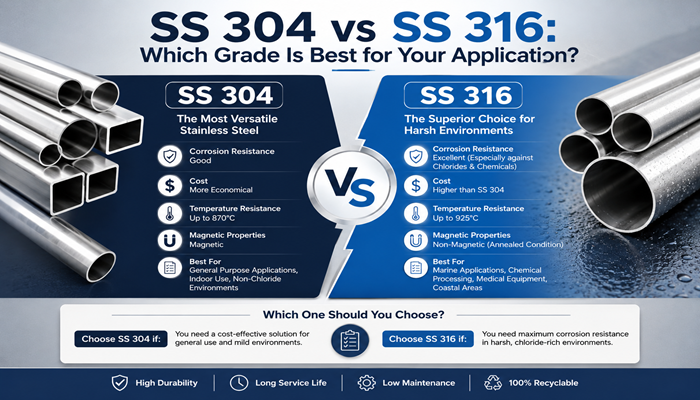
These alloys are engineered to survive environments where even SS 304 and 316 fail.

Common Nickel Alloys Used in Chemical Plants

  • Inconel 600 / 625 / 800 / 825
  • Hastelloy C276 / C22 / B2
  • Monel 400 / K500
  • Incoloy 800 / 825
  • Nickel 200 / 201

Nickel alloys offer the highest corrosion resistance among all commercial metals.

Why Chemical Plants Prefer Nickel Alloy Plates

1. Extreme Corrosion Resistance

Nickel alloys resist:

  • Hydrochloric acid
  • Sulfuric acid
  • Phosphoric acid
  • Nitric acid
  • Chlorides & seawater
  • Caustic solutions
  • Organic & inorganic chemicals

Even at high temperatures.

2. High Temperature Strength

Many nickel alloys work safely at 600°C – 1000°C. Ideal for:

  • Reactors
  • Heaters
  • Heat exchangers
  • Furnace parts
  • Thermal processing

3. Stress Corrosion Cracking (SCC) Resistance

Nickel alloys handle SCC caused by chlorides, heat, and pressure far better than stainless steel.

4. Long Service Life

Nickel alloy components last 3–10 times longer than stainless steel in corrosive environments.

5. Low Maintenance

Fewer failures → Reduced downtime → Higher plant productivity.

Applications of Nickel Alloy Sheets & Plates in Chemical Industry

1. Reactors & Reactor Vessels

Hastelloy & Inconel sheets resist acids, heat, and toxic chemicals.

2. Heat Exchangers

Nickel alloys prevent pitting, corrosion, and cracking under extreme heat cycles.

3. Chemical Storage Tanks

Used for storing corrosive media like:

  • HCl
  • Sulfuric acid
  • Chlorides
  • Caustic solutions

4. Distillation Columns

Resist attack from hot chemical vapors.

5. Piping Systems

Fabricated into pipe spools, headers, manifolds, and supports.

6. Valves, Pumps & Components

  • Pumps
  • Valves
  • Impellers
  • Agitators

7. Evaporators & Condensers

High temperature + corrosive media → Nickel alloys perform best.

8. Offshore & Marine Units

Monel & Super Duplex withstand seawater + chemicals.

Nickel Alloy Grades — Which One to Use?

A. Inconel Alloys

Best for: High temperature, oxidation, pressure

  • Inconel 600
  • Inconel 625
  • Inconel 800H
  • Inconel 825

B. Hastelloy Alloys

Best for: Strong acids, chlorides, pitting

  • Hastelloy C276
  • Hastelloy C22
  • Hastelloy B2

C. Monel Alloys

Best for: Seawater, alkalies, marine chemicals

  • Monel 400
  • Monel K500

D. Nickel 200 / 201

Best for: Caustic soda & alkali solutions

E. Incoloy Alloys

Best for: High temperature strength + corrosion

  • Incoloy 800
  • Incoloy 825
  • Incoloy 925

Advantages of Using Nickel Alloy Sheets & Plates

  • High corrosion resistance
  • Survive extreme acids
  • High strength at high temperature
  • Long service life
  • Excellent weldability
  • Ideal for aggressive chemical processes
  • Better than stainless steel in harsh environments

How to Select the Right Nickel Alloy?

  • Strong acids → Hastelloy C276 / C22
  • Chlorides → Inconel 625 / Super Duplex
  • High temperature → Inconel 600 / 800H
  • Seawater → Monel 400 / K500
  • Caustic alkali → Nickel 200 / 201

Moksh Tubes provides free technical consultation if needed.

Why Moksh Tubes Is a Trusted Supplier of Nickel Alloy Sheets & Plates

  • Nickel Alloys: Inconel, Hastelloy, Monel, Incoloy, Nickel 200
  • Thickness: 1 mm to 50 mm
  • Cut-to-size service
  • CNC, laser & waterjet cutting
  • MTC 3.1 / 3.2 certification
  • Export to 40+ countries
  • Ready stock in multiple grades
  • Corrosion-resistant materials for chemical plants

Conclusion

Nickel Alloy Sheets & Plates are the gold standard for chemical industry applications. They provide: corrosion resistance, temperature strength, durability, safety, and long-term reliability.

When stainless steel is not enough — nickel alloys become the only right choice. Moksh Tubes supplies high-grade nickel alloy plates for reactors, heat exchangers, pressure vessels, and corrosive systems.

FAQ's

Which nickel alloy is best for acid service?

Hastelloy C276 or C22.

Which alloy works best at high temperature?

Inconel 600 / 800H.

Is nickel alloy better than stainless steel?

Yes — especially in corrosive chemical media.

Do you supply cut-to-size plates?

Yes — laser, waterjet & CNC cutting available.

Contact Us

At Moksh Tubes & Fittings LLP, we’re dedicated to making your purchases seamless — offering expert advice, a wide inventory of certified products, and global support for every order, large or small.

Get in Touch