Welcome to Moksh Tubes & Fittings LLP

Monday - Friday : 8:00 AM to 7:00 PM

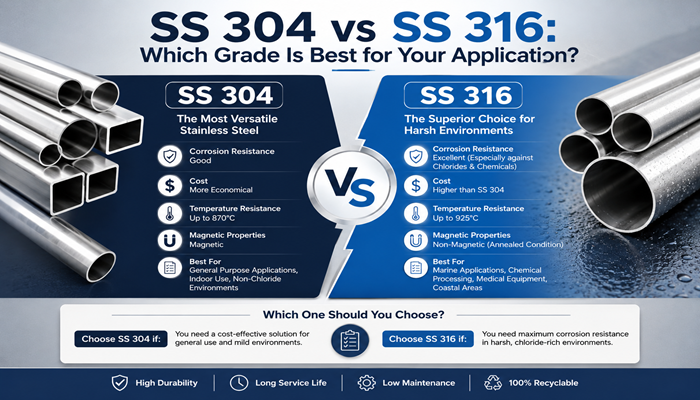
SS 304 vs SS 316: Which Grade Is Best for Your Application?

SS 304 vs SS 316: Which Grade Is Best for Your Application?

Looking for a Reliable Metal Supplier?

Get premium quality pipes, sheets, and fittings delivered globally.

Get Quote Now

Stainless steel is widely used in industries where corrosion resistance, durability, strength and long-term performance are important. Among the many stainless steel grades available, SS 304 and SS 316 are two of the most commonly used austenitic stainless steel grades.

At first glance, SS 304 and SS 316 may appear very similar. Both offer good corrosion resistance, weldability and fabrication characteristics. However, their performance can differ significantly depending on the working environment.

The most important difference is that SS 316 contains molybdenum, which generally improves resistance to chlorides and certain corrosive environments.

So, which one should you choose?

The answer depends on factors such as chemical exposure, chloride concentration, operating temperature, application requirements, product form, applicable standards and project budget.

In this guide, we will compare SS 304 vs SS 316, including their composition, properties, corrosion resistance, applications, advantages, limitations and selection factors.
Quick Answer: SS 304 vs SS 316

RequirementSS 304SS 316
General corrosion resistanceExcellentExcellent
Chloride resistanceGoodBetter
Marine applicationsLimited to moderateGenerally preferred
Chemical applicationsSuitable for many environmentsBetter suited to many aggressive environments
WeldabilityExcellentExcellent
FormabilityExcellentExcellent
General industrial applicationsExcellentExcellent
Relative material costGenerally lowerGenerally higher

In simple terms: SS 304 is often suitable for general-purpose applications, while SS 316 is commonly selected when improved resistance to chlorides and certain corrosive environments is required.

What Is Stainless Steel 304?

Stainless Steel 304, commonly called SS 304, is an austenitic stainless steel grade containing chromium and nickel as its principal alloying elements.

It is one of the most widely used stainless steel grades because it offers a useful balance of corrosion resistance, strength, weldability, formability and availability.

SS 304 can be supplied in many forms, including:

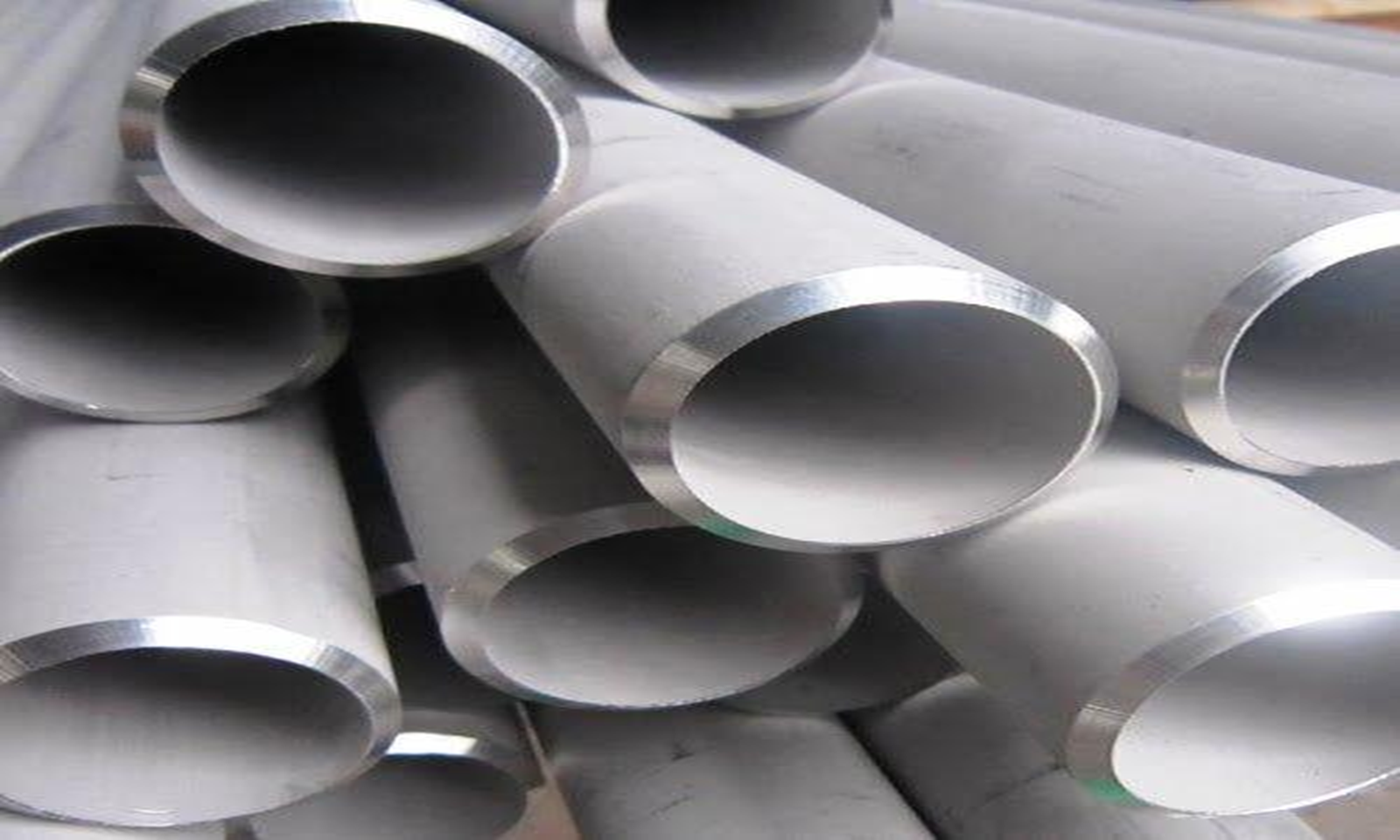
  • Stainless steel pipes
  • Seamless tubes
  • Welded tubes
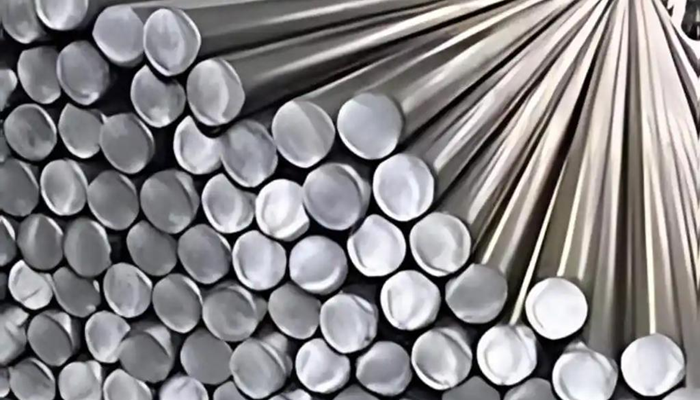
  • Round bars
  • Sheets
  • Plates
  • Coils
  • Fittings
  • Flanges

Its versatility makes it suitable for general industrial, food-processing, architectural and fabrication applications.

Key Characteristics of SS 304

  • Good corrosion resistance
  • Excellent weldability
  • Good formability
  • Good fabrication characteristics
  • Good surface finish
  • Wide availability
  • Suitable for many general industrial applications

SS 304 Chemical Composition

The exact composition depends on the applicable specification. A typical composition is shown below for general reference.

ElementTypical Requirement
Chromium (Cr)18–20%
Nickel (Ni)8–10.5%
Carbon (C)≤ 0.08%
Manganese (Mn)≤ 2.00%
Silicon (Si)≤ 1.00%
Phosphorus (P)≤ 0.045%
Sulfur (S)≤ 0.030%
Iron (Fe)Balance

Note: Actual chemical composition depends on the applicable ASTM/ASME or other material specification. Buyers should refer to the relevant material standard and Mill Test Certificate for actual values.

What Is Stainless Steel 316?

Stainless Steel 316, or SS 316, is another austenitic stainless steel grade that is widely used for applications requiring enhanced corrosion resistance.

The key difference between SS 304 and SS 316 is the presence of molybdenum in SS 316.

Molybdenum helps improve resistance to localized corrosion, particularly in environments containing chlorides.

Because of this characteristic, SS 316 is frequently considered for:

  • Marine applications
  • Chemical processing
  • Pharmaceutical equipment
  • Coastal environments
  • Food-processing equipment
  • Medical and laboratory equipment
  • Industrial applications involving corrosive media

Why Does SS 316 Have Better Corrosion Resistance?

The presence of molybdenum is one of the main reasons SS 316 generally performs better than SS 304 in chloride-containing environments.

Chlorides can cause localized forms of corrosion, including pitting and crevice corrosion, under suitable conditions.

SS 316's molybdenum content improves its resistance to these forms of corrosion compared with conventional SS 304.

However, SS 316 is not corrosion-proof. Severe environments may require specialized stainless steel grades, duplex stainless steels, nickel alloys or other materials.

SS 304 vs SS 316: Chemical Composition

ElementSS 304SS 316
ChromiumApprox. 18–20%Approx. 16–18%
NickelApprox. 8–10.5%Approx. 10–14%
MolybdenumGenerally absentApprox. 2–3%
Carbon≤ 0.08%≤ 0.08%
IronBalanceBalance

The molybdenum content in SS 316 is the major compositional difference relevant to corrosion performance.

Actual limits depend on the particular grade designation and applicable standard.

SS 304 vs SS 316: Key Differences

1. Corrosion Resistance
SS 304 provides excellent general corrosion resistance.

SS 316 generally provides improved resistance in chloride-containing and certain aggressive environments.

2. Molybdenum Content
SS 304 generally does not contain intentional molybdenum as a principal alloying addition.

SS 316 contains molybdenum, typically around 2–3%, depending on the specification.

3. Marine Applications
For many marine and saltwater-related environments, SS 316 is preferred because of its improved resistance to chloride-induced localized corrosion.

4. Cost
SS 316 is generally more expensive than SS 304 because of its alloying content, particularly nickel and molybdenum.

5. General Applications
SS 304 is often sufficient for many everyday industrial and commercial applications where extreme chloride resistance is not required.

SS 304 vs SS 316: Properties Comparison

PropertySS 304SS 316
Stainless Steel FamilyAusteniticAustenitic
General Corrosion ResistanceExcellentExcellent
Chloride ResistanceGoodBetter
WeldabilityExcellentExcellent
FormabilityExcellentExcellent
Marine SuitabilityApplication-dependentGenerally preferred
Chemical ResistanceGood in suitable environmentsBetter for many aggressive environments
AvailabilityVery wideVery wide
Relative CostLowerHigher

Important: Mechanical-property values vary with product form, condition and applicable specification. Always use the relevant standard for design values.

SS 304 Applications

Food Processing
Equipment, processing components, storage systems and general food-processing applications where the environment is compatible with the grade.

General Industrial Equipment
SS 304 is frequently used for equipment and components where good corrosion resistance and fabrication characteristics are required.

Architectural Applications
Its appearance, corrosion resistance and fabrication properties make it suitable for architectural and decorative applications.

Chemical Applications
SS 304 can be used in many chemical-processing environments, but material compatibility should always be evaluated based on the specific chemical, concentration and temperature.

Kitchen and Commercial Equipment
SS 304 is widely used for commercial kitchens, food-service equipment and related applications.

SS 316 Applications

SS 316 is commonly selected for applications where enhanced corrosion resistance is important.

Marine Industry
Used for selected components and equipment exposed to marine or salt-laden environments.

Chemical Processing
Suitable for many applications where improved resistance to corrosive chemicals is required.

Pharmaceutical Industry
Commonly specified for equipment and systems where corrosion resistance, cleanability and material compatibility are important.

Medical and Laboratory Applications
Used in various equipment and components depending on the required specification and environment.

Coastal Applications
SS 316 may be preferred over SS 304 where exposure to salt and chlorides is a significant concern.

SS 304 vs SS 316: Advantages and Limitations

SS 304 Advantages

  • Excellent general-purpose stainless steel
  • Good corrosion resistance
  • Excellent weldability
  • Excellent formability
  • Broad product availability
  • Generally lower cost than SS 316

SS 304 Limitations

  • Less resistant to chloride-induced localized corrosion than SS 316
  • May not be suitable for certain aggressive chemical environments
  • Material compatibility must be evaluated for demanding applications

SS 316 Advantages

  • Enhanced resistance to chlorides
  • Better resistance to many corrosive environments
  • Suitable for many marine applications
  • Good weldability
  • Excellent fabrication characteristics
  • Widely available in industrial product forms

SS 316 Limitations

  • Generally higher cost than SS 304
  • Not suitable for every chemical environment
  • Correct specification and application assessment are still required

Which Grade Should You Choose?

The right choice depends on the environment in which the material will operate.

Choose SS 304 when:

  • General corrosion resistance is required
  • Chloride exposure is limited
  • Cost efficiency is important
  • The application involves general fabrication
  • Food or commercial equipment is required
  • The operating environment is not highly aggressive

Consider SS 316 when:

  • Chloride exposure is significant
  • The application is marine-related
  • The environment contains corrosive chemicals
  • Enhanced localized corrosion resistance is required
  • Pharmaceutical or specialized industrial applications require the grade

The final material selection should consider chemical composition of the service environment, temperature, concentration, pressure, product form, fabrication method and applicable design standards.

What to Check Before Buying SS 304 or SS 316

Before placing an order, industrial buyers should confirm:

  1. Required grade
  2. Product type
  3. Outside diameter
  4. Wall thickness
  5. Length
  6. Schedule, where applicable
  7. Applicable ASTM/ASME/EN specification
  8. Surface finish
  9. Testing requirements
  10. MTC requirements
  11. Quantity
  12. Delivery requirements

Providing complete specifications to the supplier can help reduce errors and ensure the material matches the project requirement.

Standards and Quality Requirements

Depending on the product, relevant standards may include ASTM, ASME, EN, DIN or other applicable specifications.

For example, stainless steel products can be manufactured or supplied according to specifications such as:

  • ASTM A312
  • ASTM A213
  • ASTM A269
  • ASTM A240
  • ASTM A182

Note: The correct standard depends on the product type and intended application. Do not assume that one standard applies to every SS 304 or SS 316 product.

Why Choose Moksh Tubes?

Moksh Tubes & Fittings LLP supplies a wide range of industrial metal products in stainless steel, alloy steel, duplex, nickel alloys and other material grades.

Depending on the product and requirement, customers can discuss:

  • Required material grade
  • Product dimensions
  • Applicable specifications
  • Testing requirements
  • MTC requirements
  • Quantity requirements
  • Project-specific requirements
  • Domestic or export requirements

For your specific application, the Moksh Tubes team can help you identify the appropriate product specification based on the information provided.

Need Custom Dimensions or Rare Alloys?

We provide specialized fabrication, custom cutting, and export-grade packing globally. Request a quote or chat with our experts.

FAQ's

What is the main difference between SS 304 and SS 316?

The major difference is that SS 316 contains molybdenum, which generally provides better resistance to chlorides and certain corrosive environments than SS 304.

Is SS 316 better than SS 304?

Not for every application. SS 316 is generally preferred when improved chloride or corrosion resistance is required, while SS 304 is often sufficient for general-purpose applications.

Which is more expensive, SS 304 or SS 316?

SS 316 is generally more expensive than SS 304 because of its alloying composition, including molybdenum.

Is SS 316 suitable for marine applications?

SS 316 is commonly preferred for many marine and salt-exposed applications because of its improved resistance to chloride-induced corrosion. Suitability still depends on the specific environment.

Can SS 304 be used in chemical industries?

Yes, SS 304 can be used in many chemical-processing applications, but compatibility must be checked against the specific chemical, concentration and operating temperature.

Contact Us

At Moksh Tubes & Fittings LLP, we’re dedicated to making your purchases seamless — offering expert advice, a wide inventory of certified products, and global support for every order, large or small.

Get in Touch
Get Quote Call Now WhatsApp