
-
Call Us On
+91 97695 84950
-
Mail Us @
[email protected]
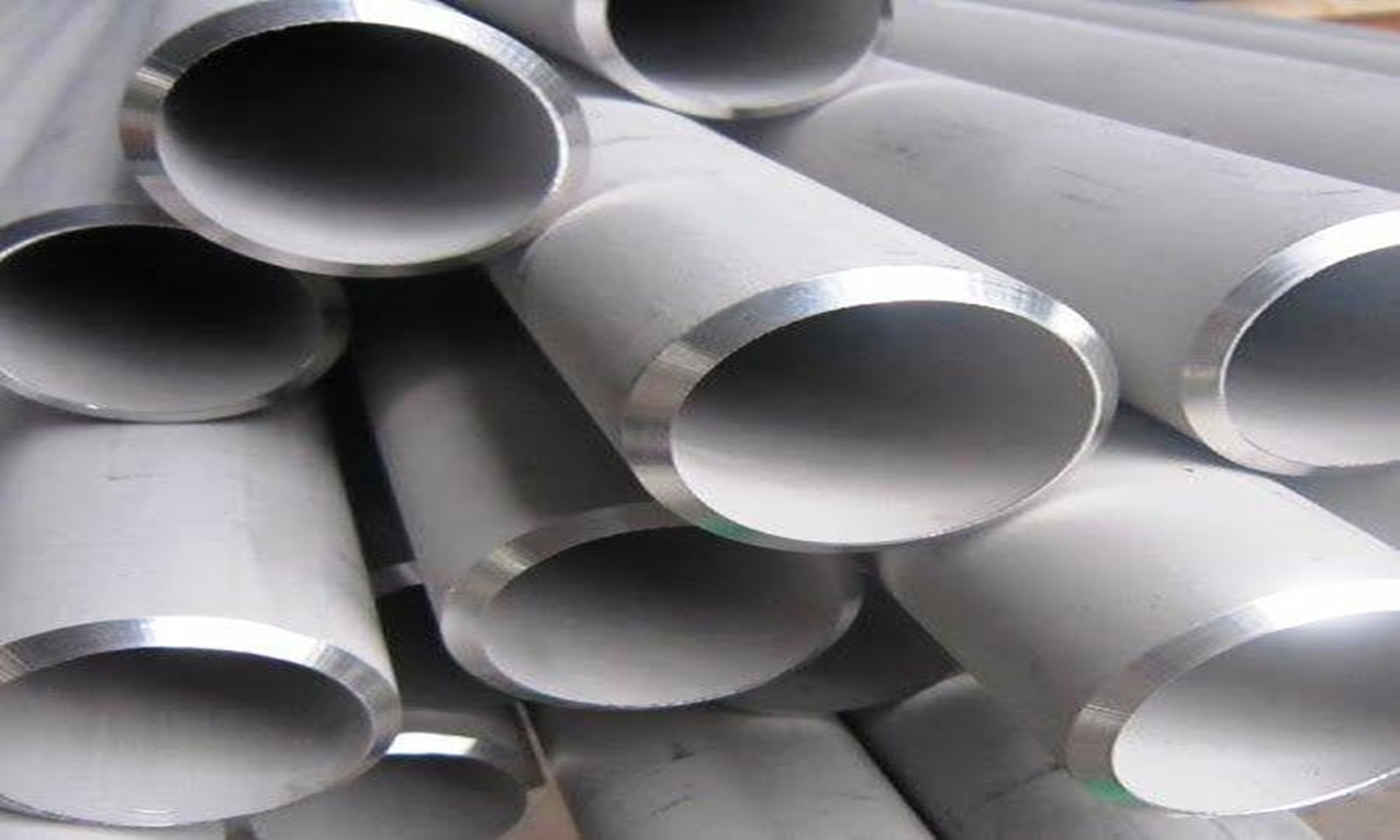
SS304 vs SS316 Stainless Steel: Differences, Properties & Applications
Looking for a Reliable Metal Supplier?
Get premium quality pipes, sheets, and fittings delivered globally.
SS304 vs SS316 Stainless Steel – Which One Is Better for Your Application?
When selecting stainless steel for industrial, commercial, or engineering applications, one of the most common comparisons is between SS304 and SS316 stainless steel. Both grades belong to the austenitic stainless steel family and are widely used in industries such as chemical processing, marine engineering, pharmaceuticals, food processing, construction, oil & gas, and power generation.
However, many engineers, buyers, fabricators, and project consultants often ask:
· What is the difference between SS304 and SS316?
· Which stainless steel offers better corrosion resistance?
· Is SS316 worth the higher price?
· Which grade is better for marine or chemical applications?
In this detailed guide by Moksh Tubes & Fittings LLP, we compare SS304 vs SS316 stainless steel in terms of chemical composition, corrosion resistance, strength, welding, pricing, industrial applications, and long-term performance to help you choose the right material for your project.
What is SS304 Stainless Steel?
SS304 is the most widely used stainless steel grade in the world. It contains approximately 18% chromium and 8% nickel, which is why it is commonly known as 18/8 stainless steel.
SS304 offers:
· Excellent corrosion resistance
· Good weldability and fabrication
· High mechanical strength
· Attractive surface finish
· Cost-effective performance
Due to its versatility and affordability, SS304 is commonly used in:
· Stainless steel pipes and tubes
· Kitchen and food processing equipment
· Water tanks
· Architectural structures
· Heat exchangers
· Industrial fabrication
· Storage tanks and process equipment
SS304 is manufactured according to international standards such as:
· ASTM A240
· ASTM A312 TP304
· ASTM A213 TP304
· ASME SA240
What is SS316 Stainless Steel?
SS316 is a premium austenitic stainless steel grade containing:
· Chromium
· Nickel
· 2–3% Molybdenum
The addition of molybdenum significantly improves resistance against:
· Chlorides
· Saltwater corrosion
· Chemical exposure
· Pitting and crevice corrosion
Because of its superior corrosion resistance, SS316 is widely known as:
· Marine grade stainless steel
· Chemical resistant stainless steel
· Surgical stainless steel
SS316 stainless steel is extensively used in:
· Offshore platforms
· Marine environments
· Pharmaceutical plants
· Chemical processing industries
· Desalination plants
· Heat exchangers
· Pressure vessels
· Medical and surgical equipment
Common standards include:
· ASTM A312 TP316
· ASTM A240 Type 316
· ASTM A213 TP316
· ASME SA312 TP316
SS304 vs SS316 – Quick Comparison Table
Property | SS304 Stainless Steel | SS316 Stainless Steel |
Chromium Content | 18–20% | 16–18% |
Nickel Content | 8–10.5% | 10–14% |
Molybdenum | No | 2–3% |
Corrosion Resistance | Good | Excellent |
Chloride Resistance | Moderate | High |
Marine Performance | Limited | Excellent |
Chemical Resistance | Moderate | Superior |
Heat Resistance | Good | Better |
Weldability | Excellent | Excellent |
Cost | Lower | Higher |
Industrial Usage | General Purpose | Harsh Environments |
Chemical Composition Comparison
SS304 Chemical Composition
Element | Percentage |
Chromium | 18–20% |
Nickel | 8–10.5% |
Carbon | 0.08% Max |
Manganese | 2% Max |
Iron | Balance |
SS316 Chemical Composition
Element | Percentage |
Chromium | 16–18% |
Nickel | 10–14% |
Molybdenum | 2–3% |
Carbon | 0.08% Max |
Iron | Balance |
The primary difference between SS304 and SS316 is the presence of molybdenum in SS316 stainless steel. This additional alloying element dramatically improves corrosion resistance, especially in chloride-rich and marine environments.
Corrosion Resistance – Which Stainless Steel Performs Better?
SS304 Corrosion Resistance
SS304 performs exceptionally well in:
· Indoor environments
· Freshwater systems
· Food processing plants
· Mild chemical exposure
· General industrial applications
However, in environments containing high chlorides or salt exposure, SS304 may develop:
· Pitting corrosion
· Crevice corrosion
· Surface rusting
This is especially common in:
· Coastal areas
· Marine applications
· Seawater systems
· Chemical plants using chlorides
SS316 Corrosion Resistance
SS316 provides significantly better corrosion resistance because of its molybdenum content.
It performs extremely well in:
· Offshore industries
· Seawater exposure
· Chemical processing
· Acidic environments
· Pharmaceutical production
· Chloride-rich applications
SS316 is highly resistant to:
· Saltwater corrosion
· Pitting attack
· Crevice corrosion
· Chemical oxidation
In coastal and offshore industries, SS316 is preferred because standard SS304 may develop pitting corrosion after long-term exposure to saltwater and humid marine atmospheres.
Why Does SS316 Resist Corrosion Better?
The addition of molybdenum strengthens the passive oxide layer on the stainless steel surface.
This protective layer helps SS316 resist:
· Chloride penetration
· Acid attack
· Industrial chemicals
· Seawater exposure
This is why SS316 is commonly selected for:
· Desalination plants
· Marine piping systems
· Offshore oil & gas platforms
· Chemical storage tanks
· Pharmaceutical processing equipment
Mechanical Properties Comparison
Mechanical Property | SS304 | SS316 |
Tensile Strength | 515 MPa | 515 MPa |
Yield Strength | 205 MPa | 205 MPa |
Elongation | 40% | 40% |
Density | 8.0 g/cm³ | 8.0 g/cm³ |
Hardness | Similar | Slightly Higher |
Both grades offer excellent mechanical strength and durability. However, SS316 performs better in highly corrosive and chemically aggressive industrial environments.
Heat Resistance Comparison
Both stainless steel grades provide strong high-temperature performance.
SS304 Heat Resistance
· Continuous service up to 870°C
· Intermittent service up to 925°C
SS316 Heat Resistance
· Better high-temperature stability
· Improved oxidation resistance
· Better thermal cycling performance
· Superior performance in chemical processing plants
SS316 is often preferred in high-temperature industrial systems where both heat and corrosion resistance are required.
SS304 vs SS316 Price Difference
One of the biggest deciding factors is cost.
Grade | Relative Cost |
SS304 | More Affordable |
SS316 | 20–40% Higher |
SS316 is more expensive because it contains:
· Molybdenum
· Higher nickel content
· More costly alloying elements
However, in corrosive environments, SS316 often provides longer service life and lower maintenance costs, making it a better long-term investment.
Welding and Fabrication
Both SS304 and SS316 offer:
· Excellent weldability
· Good formability
· Easy fabrication
· High machinability
Both grades are suitable for:
· TIG welding
· MIG welding
· Industrial fabrication
· Pipe manufacturing
· Tube bending
However:
· SS304 is easier and more economical to fabricate
· SS316 may require specialized welding procedures in critical applications
Low-carbon grades such as:
· SS304L
· SS316L
are commonly preferred for welded applications to reduce carbide precipitation and improve corrosion resistance after welding.
Applications of SS304 Stainless Steel
7
SS304 is widely used in general industrial and commercial applications.
Common Uses of SS304
· Kitchen equipment
· Food processing systems
· Stainless steel pipes and tubes
· Decorative structures
· Water pipelines
· Automotive trim
· Storage tanks
· Architectural applications
Applications of SS316 Stainless Steel
SS316 is preferred for highly corrosive industrial environments.
Common Uses of SS316
· Marine equipment
· Offshore platforms
· Chemical tanks
· Pharmaceutical plants
· Heat exchangers
· Surgical instruments
· Pressure vessels
· Coastal construction
· Industrial valves and fittings
SS304 vs SS316 for Food Industry
Both grades are considered food-grade stainless steel.
SS304 for Food Industry
Best for:
· Kitchen equipment
· Dairy processing
· Food storage
· Commercial cooking systems
SS316 for Food Industry
Best for:
· Salty food processing
· Acidic food environments
· Pharmaceutical food systems
· Chemical cleaning exposure
SS304 vs SS316 for Marine Applications
For marine and coastal environments, SS316 is the clear winner.
Saltwater exposure can eventually damage SS304, causing:
· Rust spots
· Pitting corrosion
· Surface degradation
SS316 is specifically designed for:
· Seawater systems
· Shipbuilding
· Offshore industries
· Coastal installations
This is why SS316 is commonly known as marine-grade stainless steel.
Which Stainless Steel Should You Choose?
Choose SS304 If:
· You need a cost-effective material
· The environment is non-corrosive
· The application is indoors
· You require easy fabrication
· You are working with freshwater systems
· You need standard food-grade stainless steel
Choose SS316 If:
· You require superior corrosion resistance
· The application involves saltwater exposure
· The environment contains chlorides
· You operate in chemical processing industries
· Long-term durability is important
· The project is offshore or marine-based
Advantages of SS304 Stainless Steel
· Affordable pricing
· Easy availability
· Excellent fabrication
· Good corrosion resistance
· Attractive surface finish
· Widely used worldwide
Advantages of SS316 Stainless Steel
· Superior corrosion resistance
· Excellent chloride resistance
· Better durability
· Marine-grade performance
· Outstanding chemical resistance
· Longer service life
SS304 vs SS316 – Final Verdict
There is no universal “better” stainless steel grade. The right choice depends entirely on your operating environment, corrosion exposure, budget, and performance requirements.
SS304 is ideal for:
· General industrial applications
· Indoor environments
· Food processing
· Freshwater systems
· Cost-sensitive projects
SS316 is ideal for:
· Marine applications
· Chemical processing
· Offshore industries
· Pharmaceutical plants
· Chloride-rich environments
If your application requires:
· Better corrosion resistance
· Saltwater durability
· Chemical resistance
· Longer service life
then SS316 is worth the additional investment.
However, for standard industrial and commercial applications, SS304 remains the most economical and widely used stainless steel grade worldwide.
Buy Premium SS304 & SS316 Stainless Steel Products
Moksh Tubes & Fittings LLP is a trusted manufacturer, supplier, stockist, and exporter of:
· Stainless Steel Pipes
· Stainless Steel Tubes
· SS Flanges
· SS Fittings
· SS Fasteners
· SS Sheets & Plates
Available in:
· SS304
· SS304L
· SS316
· SS316L
· Duplex & Super Duplex Stainless Steel Grades
We supply premium stainless steel products across:
· India
· UAE
· Saudi Arabia
· USA
· Europe
· Singapore
· South Africa
· Global industrial markets
Conclusion
Understanding the difference between SS304 and SS316 stainless steel is essential before selecting materials for industrial applications. While both grades provide excellent strength, durability, and corrosion resistance, the final choice depends on environmental exposure, budget, and long-term performance requirements.
For reliable stainless steel piping solutions and global export supply, contact Moksh Tubes & Fittings LLP — your trusted partner for premium stainless steel products.
Need Custom Dimensions or Rare Alloys?
We provide specialized fabrication, custom cutting, and export-grade packing globally. Request a quote or chat with our experts.
FAQ's
Is SS316 better than SS304?
Yes, SS316 offers better corrosion resistance, especially in marine and chemical environments.
Why is SS316 more expensive?
SS316 contains molybdenum and higher nickel content, increasing raw material and manufacturing costs.
Can SS304 rust?
Yes, SS304 can develop rust or pitting corrosion in chloride-rich or saltwater environments.
Which stainless steel is best for marine use?
SS316 stainless steel is the preferred choice for marine applications.
Is SS304 food-grade stainless steel?
Yes, SS304 is widely used in food processing and kitchen equipment industries.
Which is stronger – SS304 or SS316?
Both grades have similar mechanical strength, but SS316 performs better in harsh industrial conditions.
Which stainless steel lasts longer?
SS316 generally lasts longer in corrosive environments because of its superior corrosion resistance.
Recent Blogs
-
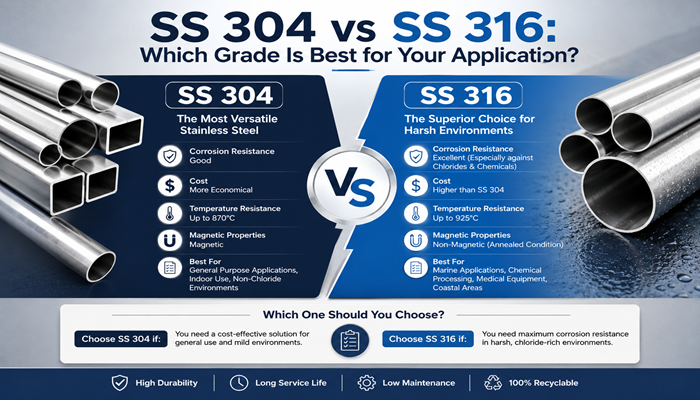
SS 304 vs SS 316: Which Grade Is Best for Your Application?
August 19, 2026
-
-
Locate Us
Office Address: Hinglaj Bhavan, Gulalwadi Mumbai, Maharashtra. 400004
Office Address: 6/A, Ground Floor, Rajwanti Mansion, Khetwadi Mumbai
Office Address: 95/95A, Dawood Baug, Sukhlaji Street, Kamatipura Mumbai
Office Address: 92E, Plot No. 3, New Tank Bunder, Darukhana, Mumbai, Maharashtra- 400 010.
get in touch
Let’s forge a connection — contact our team today.
Contact Us
At Moksh Tubes & Fittings LLP, we’re dedicated to making your purchases seamless — offering expert advice, a wide inventory of certified products, and global support for every order, large or small.
Get in Touch